Why Filter Press in Pharmaceutical Industry Is Essential
Understanding Filter Press Technology in Pharmaceuticals
- Understanding Filter Press Technology in Pharmaceuticals
- Why the Filter Press Is Ideal for Pharmaceutical Industry Needs
- Operational and Maintenance Best Practices for Pharmaceutical Filter Press
- How to Choose the Right Filter Press for Your Pharmaceutical Facility
- Future Trends and Innovations in Pharmaceutical Filtration
- Conclusion
- FAQ
- Contact Jingjin for Your Pharmaceutical Filter Press Solutions
- References
Pharmaceutical solid-liquid separation must be precise. This makes filter press technology essential for product quality and compliance. Pharmaceuticals are best prepared using a filter press to remove particulates from liquids. This ensures product purity and FDA/GMP compliance. The machines handle thick pharmaceutical slurries. Pharmaceutical production facilities benefit from better cake dryness and reduced product waste than typical separation procedures.
Understanding Filter Press Technology in Pharmaceuticals
Medical filtration tools must handle delicate materials and be clean. These stringent standards allow pharmaceutical companies to consistently extract particles from liquids using filter press technology.
Fundamental Working Principles in Pharmaceutical Applications
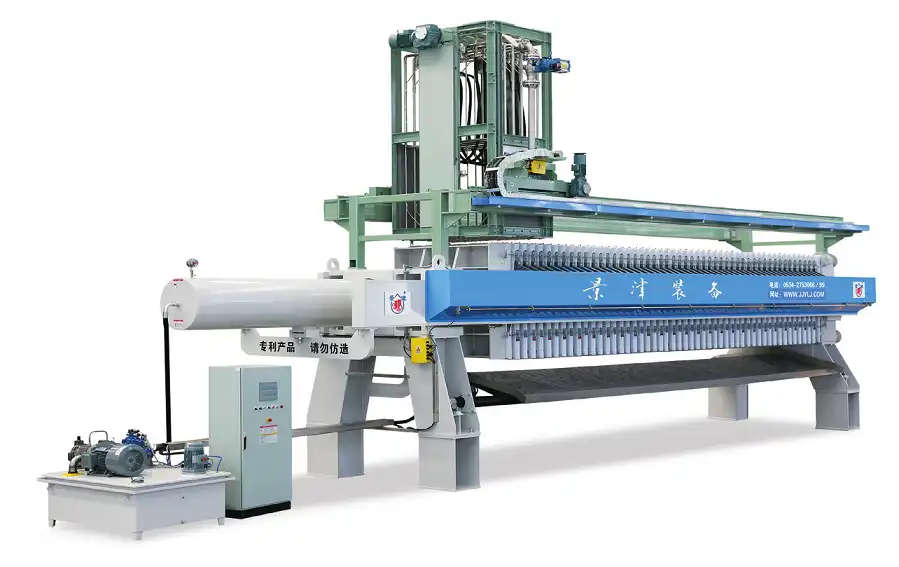
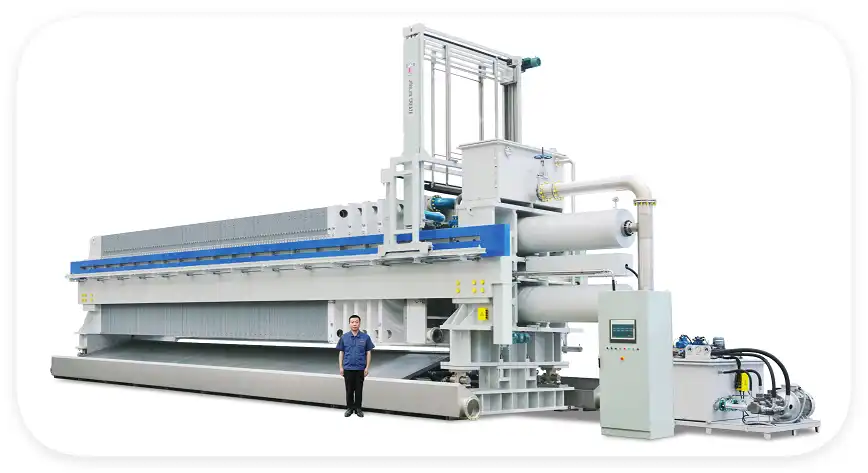
In the filter press, hydraulically pressing stacked filter plates and cloths creates chambers. Pressure-forced pharmaceutical liquid through filter cloths forms a thick layer. This method cleanses process liquids, dewaters pharmaceutical slurries, and recovers APIs from production streams.
Medical batching requires continuous filtration, which the mechanical system provides. Filter cycles include loading, pressing, washing, and releasing. Pharmaceutical legal documentation and quality standards are solved repeatably using this method.
Pharmaceutical-Specific Design Features
For safety, new pharmaceutical filter presses feature smooth surfaces, few empty spots, and easy-to-clean designs. Buildings feature 316L stainless steel, PTFE-lined components, and FDA-approved elastomers that resist cleaning and medicinal fluids. SIP, CIP, and basic document packages are included. Medical hygiene and product stream contamination are assessed using filter cloths.
Common Types and Capacity Considerations
Pharmaceutical businesses use chamber and plate-and-frame filter presses. Plate and frame designs may support pilot-scale or bespoke medicine cakes of various sizes. Individual and simultaneous chamber filter presses may make many drugs.
Consider batch size, processing time, and pharmaceutical production line compatibility when assessing capacity. Modern pharmaceutical filter presses may handle a few liters in a lab to thousands per batch in an industrial system. Drugs increase them.
Why the Filter Press Is Ideal for Pharmaceutical Industry Needs
Pharmaceutical filtration systems must be efficient and compliant. Complex pharmaceutical compounds and quality standards demand dependable filtering.
Industry-Specific Challenges and Solutions
Pharma slurries include microscopic particles, heat-sensitive chemicals, and pricey active ingredients, making separation difficult. Complex combinations may overwhelm ordinary filters, producing product loss, contamination, or inadequate separation. With controlled pressure, changeable filter media, and safety, filter press systems solve these problems.
Process control and product quality are monitored in the pharmaceutical sector. To satisfy the FDA, EMA, and other regulatory bodies, pharmaceutical companies must monitor, verify, and get consistent outcomes utilizing filter press technology.
Comparative Advantages Over Alternative Technologies
Pharma companies test centrifuges, rotary drum filters, vacuum filters, and filter presses. The main medicinal advantages of filter press technology are:
Product Recovery: Filter presses recover drugs better than centrifuges. Small losses might damage revenues when processing expensive active medicinal substances; hence, the enclosed space decreases product loss.
Batch-processing filter presses simplify process and quality monitoring. Pharmaceutical batches may be recognized, tested, and documented for legal and quality assurance.
Flexible Operation: Filter press systems can handle different feed volumes, particle sizes, and viscosities without major setup changes. Drug manufacturing demands adaptability since different compounds require different handling conditions in the same facility.
Real-World Case Studies and Benefits
A worldwide pharma company that switched to filter press technology for antibiotics recovered 15% more active components than centrifuges. Enclosed workplaces lowered contamination, batch discards, and equipment performance.
Another case study showed how filter press devices helped a pharmaceutical business manage heat-sensitive substances. Light filtration and temperature control retained moisture in the product.
Operational and Maintenance Best Practices for Pharmaceutical Filter Press
To get the most out of pharmaceutical medium filter press systems, you have to follow certain operating routines and maintenance procedures that are meant to keep product quality consistent and make sure you're following all the rules.
Key Operational Parameters
Pharma filters require pressure. Medical applications need 6–8 bar pressure, depending on particle size and cake quality. Filtration pressure is slightly adjusted to avoid cloth blindness and a homogeneous cake.
Product quality and output depend on the filtering cycle time. Process validation and real-world testing define drug cycle times. Pharmaceutical filtering takes 45–90 minutes to load, crush, wash, and discharge.
Filter cloth conditioning helps. The right drugs precondition filter cloths to produce pores and avoid filtrate contamination. Regular filter replacement increases product quality.
Pharmaceutical-Specific Cleaning and Maintenance Protocols
GMP mandates thorough cleaning between runs, especially for pharmaceuticals. Proven cleaning products and instructions decrease product residue and cross-contamination in clean-in-place (CIP) systems.
Preventative maintenance should match pharmaceutical production schedules to improve critical manufacturing. Check hydraulics, filter cloth, and power. Repairs must be recorded for quality and regulation.
Pharmaceutical change control is used while replacing parts. Validates and clears changes. Maintain crucial spare parts stocks to reduce pharmaceutical production and delivery interruptions.
Troubleshooting Common Issues
Uneven cakes, slow filtering, and poor filtrate may result from pharmaceutical filter presses. Troubleshooting fixes issues to preserve product quality. Filter fabric blinding, feed slurry preparation, and pressure settings hinder filtering. Filtration rates and pressure changes may indicate problems before they reduce production. Avoid with better precoat and feed prep.
Uneven pressure, worn filter cloths, or broken closures might impair cake production. Regular filter plate and cloth checks and operator training avoid these difficulties and preserve medical product quality.
How to Choose the Right Filter Press for Your Pharmaceutical Facility
When choosing pharmaceutical filter equipment, consider capacity, material compatibility, and automation. Current production needs and expansion goals should guide decisions.
Capacity and Material Compatibility Considerations
Pharmaceutical companies must evaluate present and future throughput when choosing a filter press. Capacity design should include batch sizes, processing rates, and pharmaceutical equipment compatibility. Small tools delay production, but large systems raise capital costs.
Material compatibility depends on extraction, cleanliness, chemical resistance, and regulation. Elastomeric seals, medical-grade stainless steel, and coatings make the device safe for cleaning and medicine.
Pharmaceutical procedures need heat and pressure. Steam, hot cleaning, and heating/cooling are offered. Equipment for process changes and new products should have safety gaps.
Plate and Frame vs Chamber Filter Press Comparison
Plate and frame filter presses are used in pharmacies with regular cake size or product changes. Its adaptability simplifies inspection, cleaning, and maintenance. This aids medicines with thorough validation and documentation.
Chamber medium filter press systems may work independently and concurrently for pharmaceutical bulk manufacture. Pharmaceutical companies increasingly need enclosed rooms to preserve chemicals and limit operator contact.
System automation varies widely. Advanced pharmaceutical filter presses capture data, adjust logic controls, and link to production systems. These features enable real-time process recording and pharmaceutical quality assurance.
Partnering with Reputable Suppliers
Pharmaceutical tool providers need validation and regulated industry expertise. Pharmacy-compliant design, installation, and operating certification. Maintenance and emergency response benefit from technical aid. Pharmaceutical factories may get global support. Standardizes and streamlines. Running pharmaceutical companies need equipment support and replacements. Pharmaceutical manufacturers trust reputable equipment and component providers.
Future Trends and Innovations in Pharmaceutical Filtration
New legislation and tech change pharmaceutical filtering. These changes affect how pharmaceutical companies use filter press systems.
Automation Integration and Smart Filtration Systems
Real-time quality monitoring, predictive maintenance, and Industry 4.0 process management are transforming pharmaceutical filters. Pressure, temperature, flow, and more are measured by smart filter press sensors. Pharmaceutical companies get vital process data.
With minimal human input, automated approaches improve document quality and uniformity. Advanced process-real-time control improves filtering cycles. This improves throughput without losing quality. Repeating a technique impacts quality and compliance; medication creation requires these skills.
Pharmaceutical companies may integrate screening and manufacturing data. They can monitor batches and enhance quality. Pharmaceutical tracking solutions in the cloud increase worldwide operations and are accessible anywhere.
Regulatory and Environmental Considerations
Changing pharmaceutical rules stresses process understanding, quality by design, and environmental protection. Filter presses now improve control, process monitoring, and environmental protection to match regulatory developments.
The environment requires pharmaceutical companies to recycle liquids, reduce water, and waste. Filter presses recycle solvents, remove particles, and reduce disposal costs.
Process management is needed for great design. QbD is monitored by modern filter presses. Real-time measurement and automated process parameter modification ensure product quality.
Expanding Role in Future Manufacturing
Pharmaceutical manufacturing technologies, including continuous processing, tailored treatment, and distributed production, are increasing filter press utilization. Modular filter presses provide flexibility. Pharmaceutical companies can quickly adjust to market and production changes.
Pharmaceutica-grade continuous production integration requires semi-continuous or continuous filter presses. Modern designs use several filter cells and automated switching to operate 24/7 without compromising quality.
Customized drugs need smaller quantities and frequent changes. We recommend filter press systems that clean quickly and avoid cross-contamination. Automating and utilizing single-use filters decreases cleaning, validation, and cross-contamination.
Conclusion
Modern drug manufacture uses filter press technology for precision, reliability, and legality. Pharmaceutical applications include active ingredient processing and purification, which benefit from filter press systems' product recovery, process control, and flexibility. Through separation, filter press technology increases pharmaceutical quality, environmental responsibility, operational efficiency, and product quality.
FAQ
1. What makes filter press technology suitable for pharmaceutical applications?
Filter press systems meet pharmaceutical quality and regulatory standards with enclosed workrooms, safe materials, and precise process management. Medical manufacturers employ technology to improve product reliability.
2. How do filter press systems compare to centrifuges for pharmaceutical use?
Filter press systems recover more solids, including minute pharmaceutical particles, and provide batch control. Fewer centrifuges reduce pollution than indoor processing.
3. What maintenance requirements are specific to pharmaceutical filter press operations?
GMP component handling, verified cleaning, and maintenance are required for pharmaceutical filter presses. Filter cloth inspections, pressure system testing, and cleaning validation studies ensure regulatory compliance.
4. How do automation capabilities benefit pharmaceutical filter press operations?
Automation provides continuous process control, data collection, and minimum human pharmaceutical quality assurance. As required by law, modern technology allows real-time monitoring and recording.
Contact Jingjin for Your Pharmaceutical Filter Press Solutions
Jingjin's pharmaceutical filtration expertise may aid pharmaceutical corporations. Jingjin makes drug filter presses. Over 136 patents and 30 years of product excellence. Pharmaceutical-grade filter presses, novel filter cloths, and extensive production tech support are available. Ask our pharmaceutical filtration experts at [email protected] how our filter press manufacturing experience can improve your solid-liquid separation processes and meet the highest pharmaceutical quality standards.
References
1. Smith, J.R., and Anderson, M.K. "Advanced Filtration Technologies in Pharmaceutical Manufacturing: Process Optimization and Regulatory Compliance." Journal of Pharmaceutical Engineering, Vol. 42, No. 3, 2023, pp. 156-172.
2. Thompson, L.H., et al. "Solid-Liquid Separation in Pharmaceutical Production: A Comprehensive Review of Filter Press Applications and Performance Metrics." International Pharmaceutical Technology Review, Vol. 28, No. 7, 2022, pp. 89-105.
3. Rodriguez, C.A., and Chen, W.L. "Quality by Design Implementation in Pharmaceutical Filtration Systems: Case Studies and Best Practices." Pharmaceutical Manufacturing International, Vol. 15, No. 4, 2023, pp. 34-48.
4. Williams, P.D., and Kumar, S. "Environmental Sustainability in Pharmaceutical Manufacturing: The Role of Advanced Filtration Technologies." Green Chemistry in Pharmaceutical Processing, Vol. 11, No. 2, 2022, pp. 78-92.
5. Johnson, R.B., et al. "Automation and Industry 4.0 Integration in Pharmaceutical Filtration: Current Trends and Future Perspectives." Pharmaceutical Automation Quarterly, Vol. 19, No. 1, 2023, pp. 112-128.
6. Martinez, A.F., and Patel, N.K. "Regulatory Compliance Strategies for Pharmaceutical Filtration Equipment: FDA and EMA Guidelines Analysis." Regulatory Affairs Professional Society Journal, Vol. 31, No. 6, 2022, pp. 203-219.
jingjin
Founded in 1988, Jingjin specializes in filter presses and liquid-solid separation solutions, serving over 130 countries worldwide, and is a standard-setter in China's filter press industry.
Get the Filter Press guide
Enter Your Email for Technical assistance for the Filter Press.


Recommended Blog
Durable Multi Disk Sludge Dewatering Machines with Low Maintenance Needs
Cost-Effective Filter Press Cloth Options for Wastewater Treatment
Best Press Filter Models for Pharmaceutical Filtration Needs
Low Cost Jingjin Filter Press Options for Efficient Sludge Dewatering
Durable Screw Dewatering Machines for Mining: Features to Look For
How a Sludge Filter Press Machine Improves Dewatering Efficiency
Step-by-Step Guide: How to Maintain a Filter Press for Optimal Performance