High Capacity Filter Presses for Mining: Enhancing Mineral Processing Efficiency
High Capacity Filter Presses for Mining: Enhancing Mineral Processing Efficiency
Understanding High-Capacity Filter Presses in Mining
- Understanding High-Capacity Filter Presses in Mining
- Enhancing Mineral Processing Efficiency with High-Capacity Filter Presses
- Selecting the Right High-Capacity Filter Press for Mining Operations
- Maintenance, Troubleshooting, and Safety Measures for Filter Presses
- Future Trends and Innovations in Filter Press Technology for Mining
- Conclusion
- FAQ
- Elevate Your Mining Operation with Jingjin Filter Press Solutions
- References
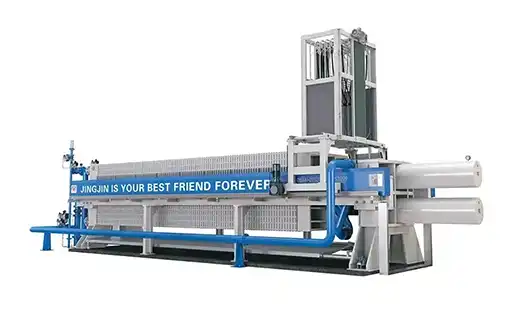
Modern material processing uses high-capacity filter presses to remove particles from liquids. These complex hydraulic systems force slurry through filter cloths, collecting process water and leaving dry cake. These strong filtration systems reliably and cost-effectively handle massive tailings, concentrate dewatering, and slurry management for mining companies worldwide.
Understanding High-Capacity Filter Presses in Mining
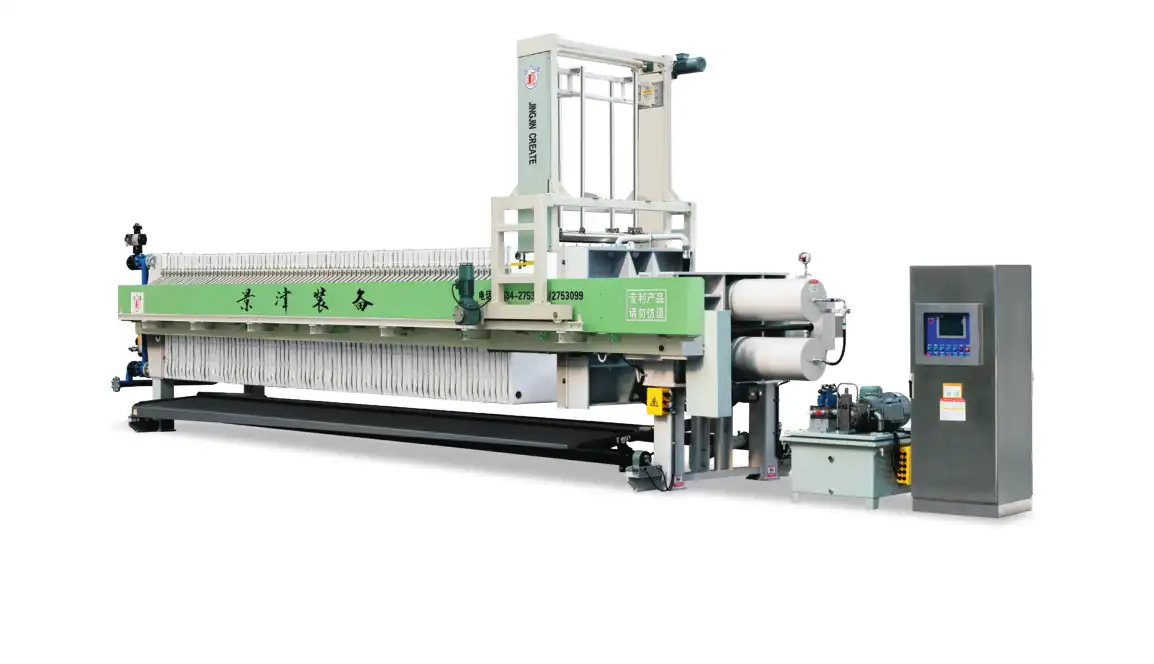
Mining filtration equipment must work properly in harsh environments. In these tough conditions, high-capacity filter presses with proven mechanical designs and various applications work effectively.
Working Principles and Essential Components
The filter press generates switched-out controlled pressure chambers between filter plates and frames. Pushing them together with hydraulic systems creates sealed chambers with filter cloths. The process sludge forces liquid through the fabric, forming cake-like bits.
Heavy-duty HDPE, cast iron, or non-rusting filter plates are essential. Mine's close using 150–250 bar hydraulic force. Select filter fabrics based on particle size and chemical compatibility. Usually polypropylene or polyester.
Comparative Advantages Over Alternative Technologies
Mining workers consider several separation methods while developing or updating facilities. Filter presses outperform centrifugal separators and vacuum filters in certain cases.
For minerals, filter presses attain cake moisture below 20%, better than centrifuges. Centrifuges work best when operated continuously, but abrasives wear out their parts quickly. Filter presses can handle gritty slurries without wear since they run consistently.
Vacuum filter technologies use less energy but can't always attain modern mining's low moisture. Filter press pressures may surpass 15 bar, exceeding vacuum systems' theoretical limit of 1 bar. This dries cakes and improves processing.
Types and Automation Variants for Mining Applications
Modern mining operations use filter presses designed for their minerals and needs. Plate and frame designs let workers handle different slurries by adding or removing plates to the chamber. Recessed plates save cycle time and simplify cake release for high-throughput applications with stable feed materials.
To squeeze harder during final dehydration, membrane filter presses may expand their diaphragms. This method works well for small parts or items that need to be dried before the next step or to save shipping expenses.
Complex process control systems monitor pressure, flow rates, and cake formation in real time, while simple programmable logic devices regulate cycle timing. Advanced automation minimizes labor, boosts cycle efficiency, and ensures quality.
Enhancing Mineral Processing Efficiency with High-Capacity Filter Presses
Mineral mines aim to reduce bottlenecks, boost production, and maintain quality. Innovative components and operating approaches in high-capacity filtering systems may solve these challenges.
Advanced Automation and Design Innovations
Modern filter press systems use clever technologies to monitor process factors. To optimize each process step, modern control systems monitor pressure buildup, filter flow, and cycle end indications. Using real-time slurry characteristics, these systems regulate feeding pressures, cleaning, and compression.
Plate layouts are optimized for cake forming and water drainage. Specialized corner feed systems evenly distribute material on filters. Pauses flow and enhances filtering. Quick-opening methods decrease cake-releasing effort and cycle time.
Quantifiable Operational Benefits and Case Studies
Many operational variables change when mining corporations use high-capacity filter presses. Replace outdated filter technology to boost throughput 25–40%. Mostly due to automation and cycle time reduction.
Using membrane filter presses instead of vacuum filters saved the Arizona copper processing facility $2.3 million annually. Concentrating on less water cut shipping costs and boosts earnings per ton.
Modern hydraulic systems are cheaper than mechanical ones; therefore, processing more data saves energy. The Nevada gold mine doubled daily production from 450 to 620 tons while saving 18% on energy.
Water recovery improves business costs and environmental safety. Improved filtrate clarity increases recycling rates, lowering fresh water consumption and meeting stricter release regulations.
Selecting the Right High-Capacity Filter Press for Mining Operations
You must consider technical and economic considerations while buying big filtering equipment. Decisions must balance operating needs with long-term maintenance and growth.
Critical Procurement Criteria Framework
Assess the input material's particle size distribution, solid content, and chemical composition before choosing a filter press. Plate material, fabric requirements, and hydraulic system depend on these factors.
Calculate throughput using peak working needs, not average ones. Seasonal or campaign processing schedules cause capacity challenges in mining plants. Having the right equipment size for peak situations keeps operations running smoothly.
Beyond corrosion resistance, materials are compatible. The material's expansion and contraction when heated or cooled, cleaning solution compatibility, and degradation over time are covered. In acidic settings, stainless steel structures last longer, whereas cheaper treatments protect in less hostile environments.
Comparative Analysis of Leading Technologies
There are several well-known filter press companies with different technologies and value propositions. By understanding these differences, you may make smart selections that match your needs.
Famous European companies specialize in precise engineering and high-tech computer systems and charge more for reliable and complex process control operations. High-quality products and advanced automation integration are their strengths.
Asian producers make inexpensive, high-quality goods. They're best for high-volume use where simplicity and low maintenance matter more than fancy features. These solutions work well for simple, exhausting tasks with minimal procedure.
Various sources provide simple modifications, typical settings, and custom-engineered solutions. Producers with full engineering assistance and flexible design may benefit companies with limited space or particular material handling demands.
After-Sales Support and Operational Considerations
Maintenance and replacement parts are essential for long-term performance. Service networks allow manufacturers to fix components quicker and cheaply than those that ship them overseas.
Operations staff learn how to do their jobs and solve problems via training. Complete training lowers downtime and extends tool life by teaching appropriate use. Cost and downtime must be considered while stocking spare parts. Locally storing hydraulic seals and filter cloths is optimal, while purchasing less vital parts as needed.
Maintenance, Troubleshooting, and Safety Measures for Filter Presses
Preventive maintenance and quick repairs keep filter presses running. Mining problems demand special solutions and safety.
Systematic Inspection and Maintenance Protocols
All important system components must be inspected regularly to preserve performance and avoid failures. Check filter plates for cracks around feed holes and corner connections, where strain builds up. Surface scratches and gouges may damage the material and impair binding, so fix them promptly.
Maintaining hydraulic systems involves fluid analysis, seal checks, and pressure testing. Contaminated hydraulic fluid increases component wear and causes pressure fluctuations, reducing filter quality. Contamination patterns are detected by monthly fluid sampling and analysis algorithms before parts fail. Filter cloths require dirt-specific cleaning solutions. The right fabric and its care affect cycle times and cake quality; hence, this part is vital to system performance.
Common Operational Issues and Solutions
Maintenance difficulties like hydraulic leaks are common in mining. External leaks indicate dirt or wear-related seal failure. Internal leaks lower pressure or alter sealing. It usually needs cylinder rebuilding or valve replacement.
Uneven cake production implies feed distribution or filter media issues. Systematic pressure monitoring while filling detects routing faults before they influence product quality. Replace clothes as they wear out instead of waiting for failure. Poor filtering may imply cloth breakage or plate misalignment. Checking turbidity helps you detect problems early and fix them before the product's criteria are exceeded.
Safety Standards and Compliance Requirements
Mining companies must follow strict safety rules for ordinary and emergency scenarios. Because pressures may damage people, hydraulic systems need lockout and pressure release devices.
Chemical-resistant clothes, eye protection against hydraulic fluid spray, and hearing protection during high-pressure tasks are examples of safety equipment. Emergency showers and eyewash stations must be near the filter press. Limited room is needed to enter filter press chambers for significant maintenance or cloth replacement. Air testing and cooling monitor worker safety and regulations.
Future Trends and Innovations in Filter Press Technology for Mining
Automation and stricter environmental requirements are advancing filter press technology. These changes should improve operations and worldwide treatment.
Digital Integration and Smart Monitoring Systems
Internet of Things sensors monitor operational metrics continuously instead of periodically. Vibration monitors detect early mechanical faults, while pressure detectors track performance decline. This information is sent to central control systems, which may rapidly repair and optimize operations.
Machine learning algorithms use previous data to set feed settings. The gadgets automatically modify cycle settings to enhance productivity and output quality. Work is easier and more consistent for operators.
Equipment makers can remotely monitor faults before they impact operations. It decreases equipment maintenance costs and boosts availability via anticipatory intervention.
Advanced Materials and Environmental Innovations
With new membrane material formulas, technology is boosting water removal and longevity. Chemical-resistant, improved polymer blends are stronger and more flexible.
Optimizing water recycling saves money and respects the environment. Filter presses and other water treatment technologies assist closed-loop systems in recycling more with less water and debris.
Energy efficiency is mostly achieved by upgrading hydraulic systems and recovering compressed air heat. Energy-efficient pumps and variable-frequency motors save power without sacrificing quality.
Conclusion
Modern mining operations need large filter presses to reliably remove particles from liquids. Due to their established mechanical design, considerable automation, and ongoing technical improvements, these systems are long-term investments that pay both financially and practically. Selecting and installing high-capacity filter press technology provides mining professionals with long-term competitive benefits via improved efficiency, reduced operating costs, and better environmental compliance.
FAQ
1. How do I determine the appropriate filter press capacity for my mining operation?
Capacity depends on feed slurry solids, particle size, and cycle time. Calculate daily working amounts during high-demand seasons. Considering maximum cake width, filtrate quality, and daily work hours. Professional filter professionals help determine the best size for capacity expansion.
2. What distinguishes filter presses from centrifuge systems for mining applications?
Filter presses are great for dry cake work and moving tough materials without much wear. Without spinning, they don't wear out mechanically. While centrifuges are better for continuous operation, they produce wetter cakes and need more frequent repairs in demanding use. Filter presses handle various feeds and are straightforward to maintain.
3. Can filter presses handle corrosive and abrasive mining slurries effectively?
Modern filter presses can handle acidic and harsh tasks with material and design changes. Chemicals don't corrode stainless steel plates, and low-cost coatings protect. Abrasive materials require the right filter cloth, and hollow plate designs may reduce wear. These issues can be solved by reliability-focused system design.
Elevate Your Mining Operation with Jingjin Filter Press Solutions
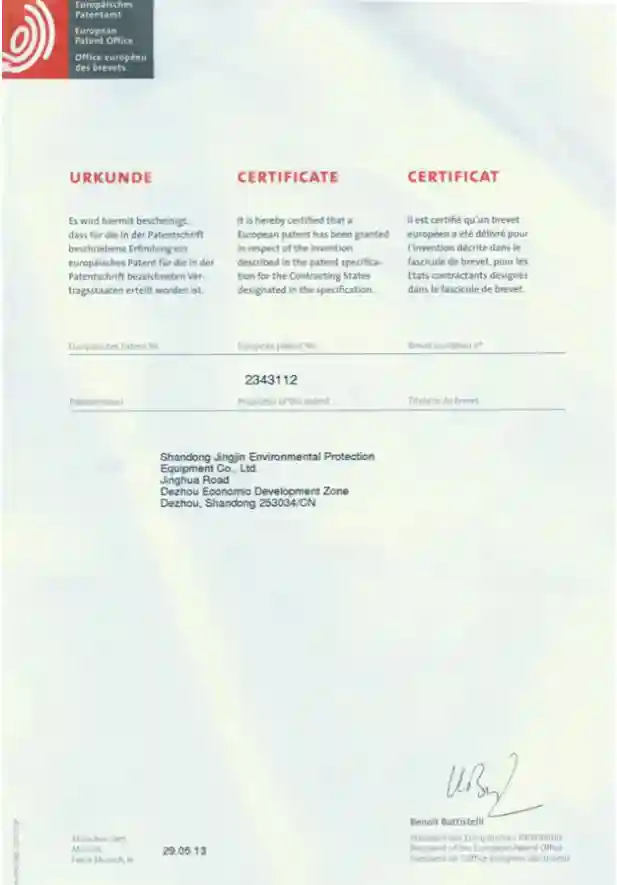
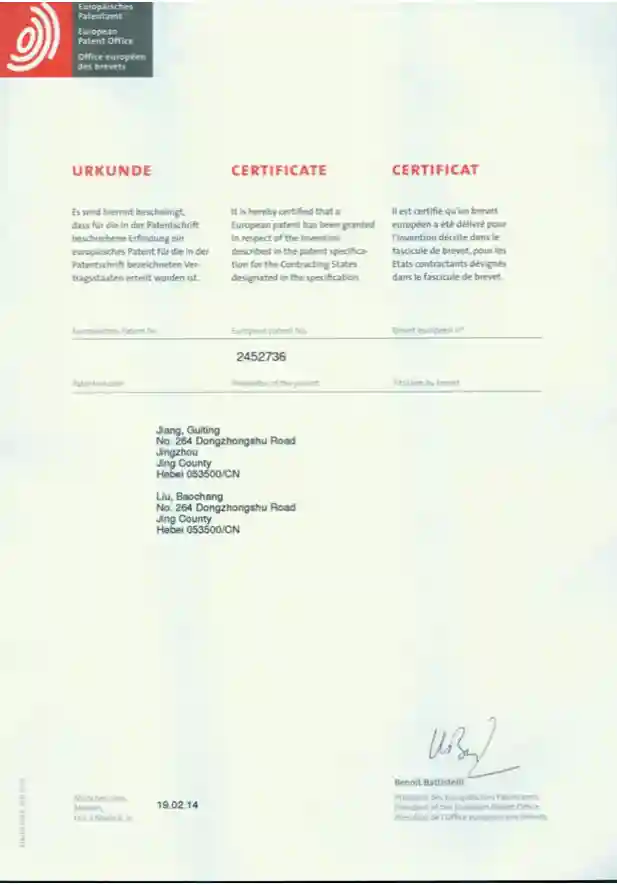
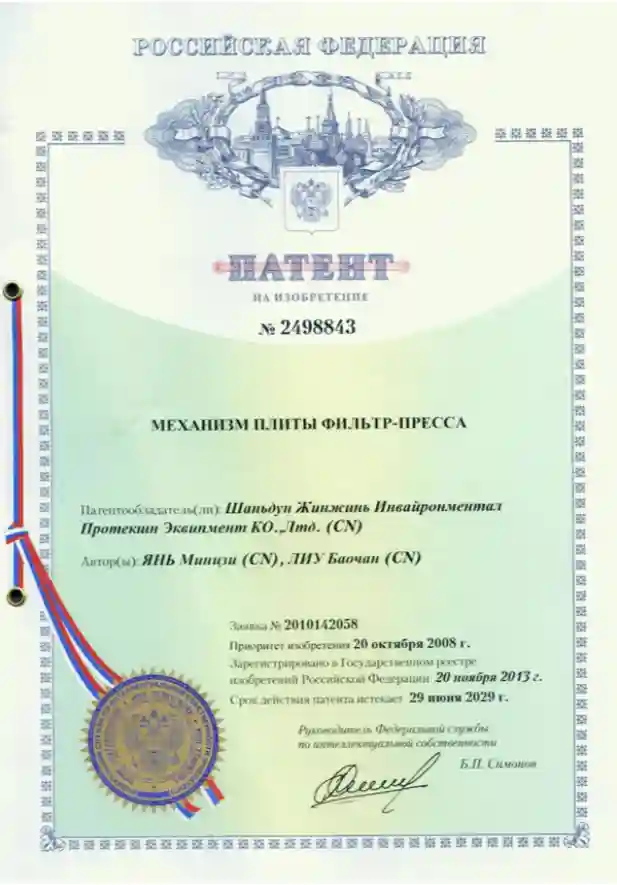
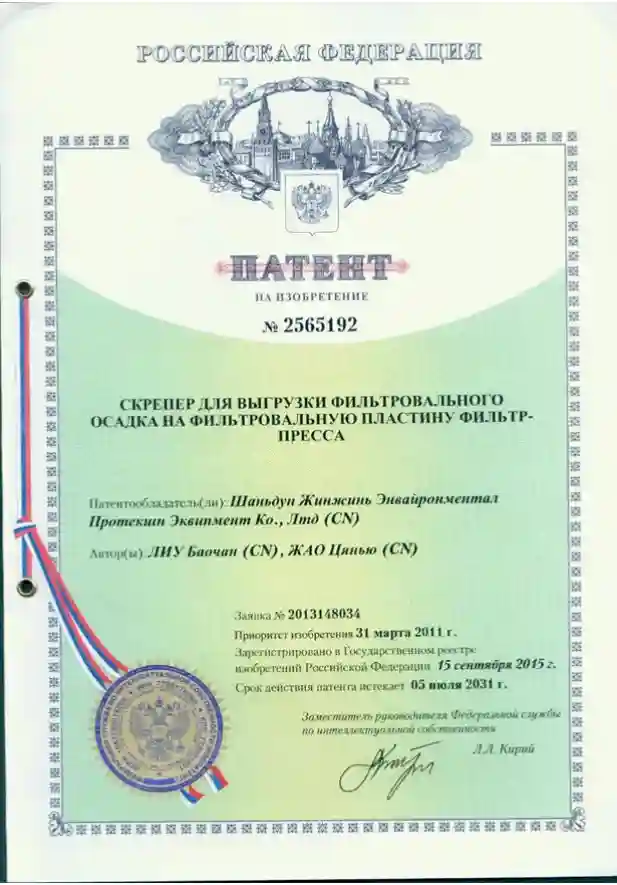
Jingjin's filter press expertise may help mining companies improve drainage and save money. Following 35 years in business, Jingjin has 136 patents. Make mineral processing-specific filtration solutions. Luxury filter cloths, customized filter plates, and high-capacity filter presses for harsh mining applications are available. Contact our technical team at [email protected] to learn how our innovative filter press systems can increase productivity and reduce maintenance. Discover why mining workers worldwide use Jingjin solid-liquid separation filter presses.
References
1. Smith, J.A., et al. "Advances in Solid-Liquid Separation Technology for Mineral Processing Applications." Journal of Mining Engineering, vol. 45, no. 3, 2023, pp. 112-128.
2. Rodriguez, M.C., and Thompson, R.K. "Economic Analysis of High Capacity Filtration Systems in Modern Mining Operations." International Mining Technology Review, vol. 28, no. 7, 2023, pp. 45-62.
3. Chen, L., et al. "Performance Optimization of Membrane Filter Presses in Copper Concentrate Dewatering." Minerals Processing International, vol. 67, no. 4, 2023, pp. 78-95.
4. Williams, P.R. "Comparative Study of Filtration Technologies for Tailings Management in Gold Mining Operations." Mining Environmental Management, vol. 19, no. 2, 2023, pp. 156-174.
5. Anderson, K.M., and Davis, S.J. "Maintenance Strategies for Filter Press Systems in Abrasive Mining Applications." Equipment Reliability in Mining, vol. 41, no. 6, 2023, pp. 203-218.
6. Liu, X., et al. "Future Trends in Smart Filtration Technology for Sustainable Mining Operations." Advanced Mining Technology Quarterly, vol. 15, no. 1, 2023, pp. 89-106.
jingjin
Founded in 1988, Jingjin specializes in filter presses and liquid-solid separation solutions, serving over 130 countries worldwide, and is a standard-setter in China's filter press industry.
Get the Filter Press guide
Enter Your Email for Technical assistance for the Filter Press.
Recommended Blog
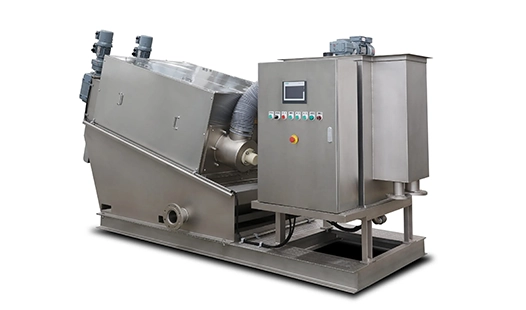
Best China Screw Press Dewatering Machine for Mexico Buyers
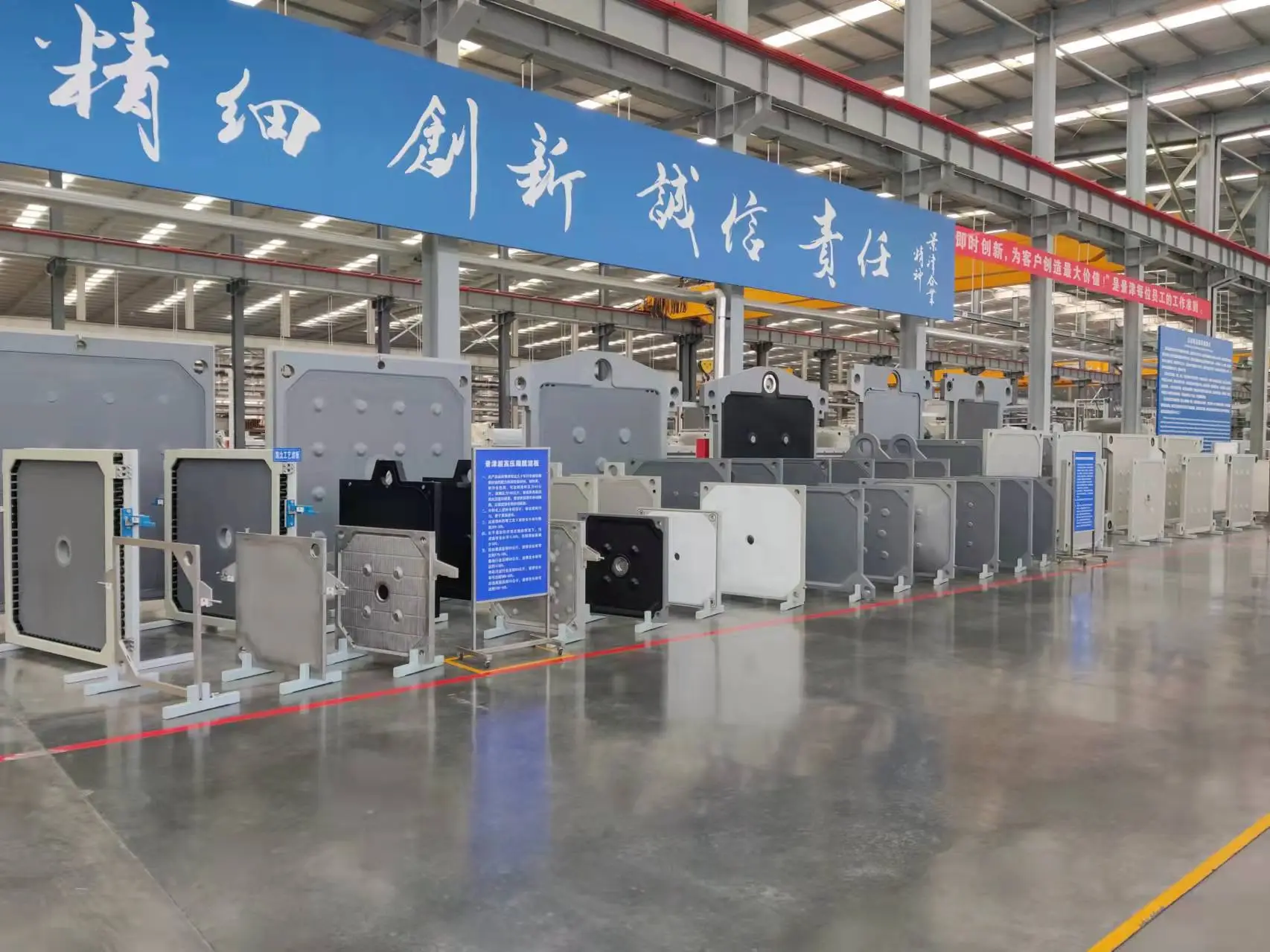
Customized Filter Press Plates for the Mining Industry: What You Need to Know
China Multi Disk Screw Press vs India: Cost & Performance 2026
Filter Press Solutions for India Pharmaceutical Plants from China
Top China Screw Dewatering Machine Suppliers for Asia Markets
Understanding Jingjin Filter Press Parts and Accessories: What You Need to Know
China Sludge Dewatering Factories for Turkey Wastewater Projects
What Are Filter Press Plates and How Do They Work? A Comprehensive Guide