Improving Dewatering Efficiency: Expert Strategies Using Multi Disk Screw Press Technology
Improving Dewatering Efficiency: Expert Strategies Using Multi Disk Screw Press Technology
Understanding Multi-Disk Screw Press Technology
- Understanding Multi-Disk Screw Press Technology
- Key Factors Impacting Dewatering Efficiency
- Comparative Analysis: Multi-Disk Screw Press vs. Alternatives
- Procurement Guide: Buying and Implementing Multi-Disk Screw Presses
- Conclusion
- FAQ
- Partner with Jingjin for Advanced Sludge Dewatering Solutions
- References
Problems with dewatering efficiency raise prices and make it harder to follow rules in the mining, chemical processing, and wastewater treatment industries. The multi-disk screw press solves these problems by combining drying and hardening into a single, small unit. This cutting-edge solid-liquid separation technology uses the least amount of energy, takes up the least amount of space, and consistently dries the cake. This makes it a smart investment for facilities that deal with sludge, slurry, and process residuals.
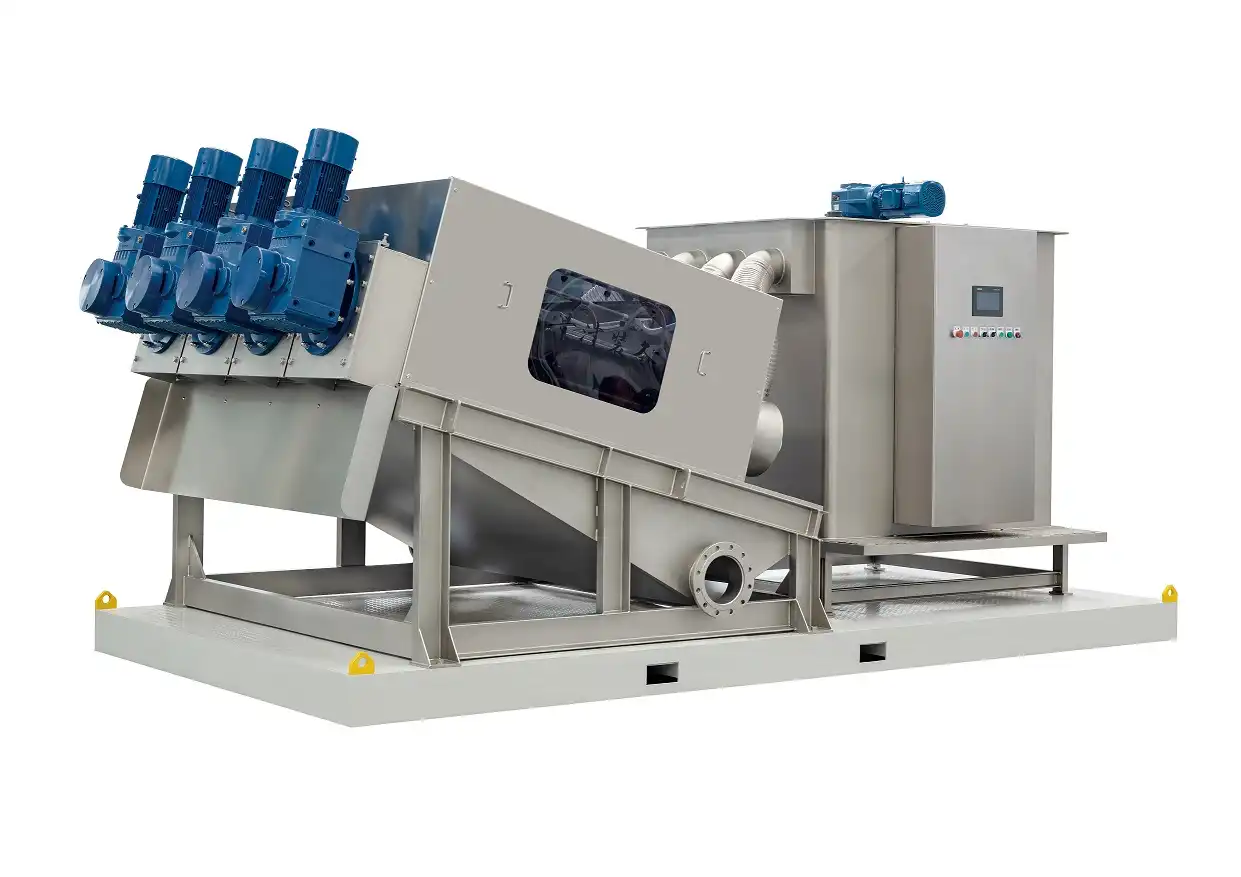
Understanding Multi-Disk Screw Press Technology
Modern needs for dewatering have led to new types of tools that go beyond standard centrifuges and belt presses. More and more people in our business are interested in screw-based dewatering options, especially those that use various disk configurations to improve dependability and throughput.
How does the Technology Works?
The main part of the device is a spinning screw shaft inside a cylinder-shaped drum made up of rings that move and rings that stay in place. As the sludge moves into the thickened zone, gravity draining starts to lower the amount of water in the mixture. The spinning shaft moves the material slowly toward the dewatering zone. As it gets closer to that zone, the increasing pitch decrease makes the compression force stronger.
Moving rings move in a circle around unmoving rings, which is caused by the screw turning. This changing interaction makes filter holes that don't get clogged, which is very helpful when working with sticky or fibrous materials. Filtrate drains through the holes in the rings, while solids move toward the outlet end. Depending on the type of sludge and polymer dose, the cake dries to a level between 15% and 25%.
Design Features That Drive Performance
The stainless steel design can handle the harsh conditions that are popular in chemical and pharmaceutical settings. Laser-cut rings keep smoothness limits to within 0.05 mm, which makes sure that pressure is spread evenly and stops sludge from leaking. When screw edges are hard-faced, they can work for an extra 30,000 to 40,000 hours in standard city circumstances.
When the percentage of solids coming in changes, automated torque tracking changes the back-pressure on the fly. Instead of having to make complicated changes to the different speeds of centrifuges, this equipment can keep working properly even when the feed conditions change. The enclosed design reduces smells and worker contact with dangerous materials, which is especially helpful in petrochemical and plant settings.
Application Across Industries
Food preparation plants that deal with wastewater that has a lot of fat in it benefit from the constant self-cleaning action that keeps filter media from becoming clogged. By getting their water straight from aeration basins, municipal treatment plants that handle low-concentration activated sludge (as little as 0.2% solids) don't need separate thickener tanks. Mining companies that dewater tailings like how strong it is and how well it works, even in rough slurry conditions.
Chemical companies that make dyes and resins need to keep precise moisture levels to keep their products meeting standards. The screw and disk arrangement can be changed, which lets process engineers fine-tune the compression settings for each batch. This makes sure that the best separation is achieved for a wide range of material properties.
Key Factors Impacting Dewatering Efficiency
In traditional systems, operational problems happen because of poor thickening, too much polymer use, and frequent repair breaks. When buying, teams know how the design of the equipment affects these factors, they can look at the total cost of ownership instead of just the purchase price.
Addressing Traditional System Limitations
To keep the cloth from getting blind, belt filter presses need 1,000 to 3,000 liters of high-pressure wash water per hour. Decanter centrifuges make noises louder than 85 decibels and apply strong shear forces that break up floc structure, which raises the need for polymers. Plate-and-frame presses need batch operation steps that lower the amount of work they can do when they are fully loaded.
Screw-based technology works all the time and uses less than 1% of the water that other technologies do. The multi-disk screw press, with moving bands, moves piled solids out of the way automatically, without using chemicals or high-pressure jets. This arrangement lowers both the cost of treating water and the amount of water that is dumped into the environment.
Critical Design Elements
The time spent in each compression step is controlled by the optimal pitch sequence of the screws. By slowly raising the pressure, hydraulic shock is avoided, which protects the flocculant structure and keeps solids catch rates above 95%. The thickening zone gives the polymers time to mix and react before they are compressed mechanically. This improves the dehydration process and lowers the cost of the chemicals used.
When compared to single-disk designs, smoother output is achieved through better cake compression through multiple ring steps. Each stage takes a small amount of moisture at a time, which stops the routing and bypass flows that happen when pressure rises too quickly. This staged method also makes less noise (usually 60 to 70 dB), which makes the workplace better.
Maintenance Practices That Extend Lifespan
Polymer dosing problems can be found before they affect downstream processes by looking at the uniformity of the cake output every day. Bearings don't wear out too quickly when they are oiled, and their gaps are checked once a week. The modular ring assembly lets you change it without taking off the whole drum. This cuts down on downtime to 4–6 hours, compared to centrifuges, which need fixes that take several days.
Replacements of wearable parts are planned to happen at regular intervals. Moving rings usually need to be replaced every 30,000 hours of use, but screw rods and fixed rings last a lot longer. This planned repair schedule helps with accurate lifetime costing when evaluating purchases.
Comparative Analysis: Multi-Disk Screw Press vs. Alternatives
To choose the right dewatering equipment, you need to look at its performance measures, operational costs, and ability to work with certain types of materials. When people are comparing technologies, we've seen that they often don't look at secret costs like the amount of polymer used, the amount of water used, and the amount of work that goes into upkeep.
Performance Metrics Across Technologies
Belt filter presses can handle between 10 and 150 cubic meters of material per hour, but they have trouble with thick sludge that blocks the filter cloth. With city biosolids, cakes are usually 18 to 22 percent dry. Polymer needs between 4 and 8 kg per ton of dry solids, and mid-capacity units take up an average of 25 to 40 square meters of space.
Decanter centrifuges get cakes to be drier (22-28%) and take up less space (8–15 square meters), but they use 15–30 kW per unit. Rotation at high speeds (3,000 to 4,000 RPM) causes strong shear forces that break up the floc structure, which means more polymer is needed. Because of noise and shaking, isolation pads and soundproof shelters are needed.
Depending on the type, multi-disk screw presses take up 10 to 20 square meters of space and can process 5 to 30 cubic meters of material per hour. The cake is 15–25% dry, and the amount of polymer used is about the same as with belt presses (2–6 kg per ton of dry solids). The average amount of energy used is 1.5 to 3 kW, which is 80 to 90% less than with centrifuges. The low-shear climate keeps the structure of the flocs, so the separation works well even when the intake conditions change.
Lifecycle Cost Considerations
At industrial power rates, screw-based systems cost about $12,000 to $18,000 in energy costs over ten years of use, while equivalent-capacity centrifuges cost $80,000 to $120,000. Belt press running costs go up by $15,000 to $25,000 because of the water used to wash clothes. For screw press uses, these costs are less than $1,000.
Maintenance jobs take a wide range of different types of work. It costs between $3,000 and $8,000 per set to change the cloth on a belt press every 6 to 18 months. The tightness needs to be adjusted once a week. Every three to five years, skilled technicians must repair the bearings and recondition the bowls of centrifuges, which costs between $15,000 and $30,000. Maintenance on a screw press is mostly about replacing modular rings, which can be done by in-house staff and usually costs between $5,000 and $10,000 per replacement cycle.
Supplier Evaluation Criteria
Reliable makers show that their products have been installed in similar situations before; give full paperwork such as P&ID plans and electrical schematics; and keep extra parts on hand so they can be sent out quickly, such as for the multi-disk screw press. Technical help is available around the clock thanks to global service networks. This is especially important for EPC contractors who are in charge of foreign projects.
The warranty should cover the main parts (screw shaft, motor, control panel) for 12 to 24 months and say how long it will take to get expert help. Before a machine is shipped, it goes through factory acceptance testing to make sure it works properly and doesn't make too much noise. Companies that are ISO 9001 certified and have written quality control processes are more likely to make sure that their products meet consistent standards.
Procurement Guide: Buying and Implementing Multi-Disk Screw Presses
Getting the right tools means making sure that the technical requirements match the practical goals, all while keeping an eye on the budget and delivery times. Procurement teams can do their jobs better if they know about customization choices and how well a vendor's skills match the needs of a project.
Sourcing from Trusted Manufacturers
When looking at multi-disk screw press providers for draining or treating wastewater, the range of capacities is very important. Entry-level models that can handle 5 to 10 cubic meters per hour work well for smaller city halls or industrial sites that are spread out. Most city sewage plants that serve 20,000 to 100,000 people can handle units that process 15 to 25 cubic meters per hour. Heavy-duty systems that can handle more than 30 cubic meters per hour are used in mines, making chemicals, and big city projects.
Construction standards are based on how well the materials work together. SS304 stainless steel is usually used for city biosolids, but chemical processing and the pharmaceutical industries need SS316 or higher types that can handle environments that are acidic or chloride-rich. Manufacturers who offer different coatings and material changes give customers more choices for specific uses.
Pricing and Configuration Considerations
Base prices for small models (5–10 m³/h) run from $45,000 to $75,000; for medium-sized units (15–25 m³/h), from $80,000 to $150,000; and for large systems, over $200,000, based on the amount of automation and the materials used. These prices are FOB; freight, installation, and completion add 15–25% to the total cost of the job.
Customization choices include electrical systems that won't blow up in dangerous places, more automated systems with PLC integration for SCADA compatibility, and special polymer dosing systems that meet particular flocculation needs. Modular designs from vendors let you increase capacity by installing more modules next to each other without having to replace old equipment.
Delivery and Warranty Terms
Lead times for standard setups are 8 to 12 weeks, and lead times for customized units are 14 to 18 weeks. When project deadlines require faster delivery, expedited production can cut the wait time to 6 to 8 weeks for an extra 15 to 20 percent. Shipping by ocean freight to big U.S. ports takes 4 to 6 weeks. Shipping by air freight cuts the travel time to 7 to 10 days, but it costs about three times as much.
For 24 months, the warranty should cover basic parts, and for 12 months, it should cover worn parts like rings and seals. Remote troubleshooting support and on-site setup help make sure that the beginning goes smoothly. Vendors with technical offices in North America can respond more quickly than those that only have help in other countries. Jingjin Equipment brings more than 30 years of experience separating solids from liquids to the North American market. Our engineering team has 136 patents and has installed multi disk screw press solutions in 123 countries. These solutions are made to work with wastewater from cities, mine sludge, chemicals, and food. Our flexible designs can be changed to fit the needs of each spot while still performing well in harsh conditions. Get in touch with our technical experts to talk about your dewatering problems and find setup choices that will help your separation processes run more smoothly.
Conclusion
In the mining, chemical processing, food production, and wastewater treatment industries, effective dewatering has a direct effect on working costs, legal compliance, and environmental stewardship. Traditional technologies have a lot of problems, like using too much energy or water or needing to be serviced too often. The multi-disk screw press solves these problems. With low-shear compression, self-cleaning ring designs, and small sizes, these systems provide constant performance while lowering the total cost of ownership. When procurement teams look at separation equipment, they should look at the total cost of ownership, which includes energy use, polymer consumption, and maintenance work, as well as the original purchase price. As the need for automation and sustainability grows, modern screw press technology puts facilities in a good position to meet changing operating needs quickly.
FAQ
1. What sludge types work best with screw press dewatering?
After the right flocculation, this technology works great with biological city biosolids, food industry waste that is high in fats and oils, chemical precipitates, and mining tailings. The self-cleaning ring design can handle thick and oily materials that would normally get stuck in a belt press cloth or overflow into spinning bowls. To keep rings and screw tips from wearing out faster, abrasive artificial sludges need to have grit removed upstream.
2. How often do critical components need replacement?
Moving rings usually last between 30,000 and 40,000 hours of use in normal city situations, which is about 4 to 5 years of constant use. Many times longer than 50,000 hours, fixed rings and screw shafts last a lot longer. The flexible design lets the rings be changed in 4 to 6 hours without taking apart the drum assembly, which keeps production running as smoothly as possible.
3. Does this equipment suit mobile dewatering applications?
Screw presses are great for truck-mounted or containerized mobile systems because they have a small size, are light, and don't shake easily. In contrast to centrifuges, which need exact leveling and hard bases, these units can handle small misalignment without affecting their performance. A number of companies use configurations that are mounted on trailers to serve temporary building sites and emergency situations.
Partner with Jingjin for Advanced Sludge Dewatering Solutions
Jingjin Equipment offers complete screw press systems backed by 36 years of experience in filter engineering and a service network that spans 123 countries around the world. Our Multi disk screw press designs use unique self-cleaning technology, materials that don't rust, and automation packages that are made to work with wastewater from cities, industrial process streams, and mines. As a top Multi disk screw press maker, we help EPC contractors with full paperwork, factory acceptance testing, and commissioning, which makes sure the project goes smoothly. You can email our technical team at [email protected] to talk about your unique needs, see performance data from similar sites, and get full quotes. Our engineers offer free process reviews that can help you figure out the best way to set up and handle your separate problems. Experience the practical benefits of tried-and-true draining technology backed by quick, friendly service around the world.
References
1. Chen, G., Lock Yue, P., & Mujumdar, A. S. (2002). Sludge Dewatering and Drying. Drying Technology, 20(4-5), 883-916.
2. Mahmoud, A., Olivier, J., Vaxelaire, J., & Hoadley, A. F. (2013). Electrical Field: A Historical Review of Its Application and Contributions in Wastewater Sludge Dewatering. Water Research, 47(8), 2523-2542.
3. Neyens, E., Baeyens, J., Dewil, R., & De Heyder, B. (2004). Advanced Sludge Treatment Affects Extracellular Polymeric Substances to Improve Activated Sludge Dewatering. Journal of Hazardous Materials, 106(2-3), 83-92.
4. Christensen, M. L., Keiding, K., Nielsen, P. H., & Jørgensen, M. K. (2015). Dewatering in Biological Wastewater Treatment: A Review. Water Research, 82, 14-24.
5. Scholz, M. (2016). Wetlands for Water Pollution Control (2nd ed.). Elsevier Science, Chapter 8: Sludge Treatment and Disposal, pp. 189-224.
6. Tchobanoglous, G., Stensel, H. D., Tsuchihashi, R., & Burton, F. (2014). Wastewater Engineering: Treatment and Resource Recovery (5th ed.). McGraw-Hill Education, Chapter 14: Biosolids Processing, Storage, and Beneficial Use.
jingjin
Founded in 1988, Jingjin specializes in filter presses and liquid-solid separation solutions, serving over 130 countries worldwide, and is a standard-setter in China's filter press industry.
Get the Filter Press guide
Enter Your Email for Technical assistance for the Filter Press.
Recommended Blog
How to Choose the Right Screw Dewatering Equipment for Your Paper Mill Sludge
Comparing Industrial Feed Pump Specifications for Filter Press Systems

Where to Buy Reliable Feed Pumps for Filter Press: A Buyer’s Guide
Customized Filter Press Plates for the Mining Industry: What You Need to Know
What Materials Are Used to Make Filter Press Cloths? A Comprehensive Guide
How a Sludge Filter Press Machine Improves Dewatering Efficiency