How to Customize a Filter Press for Specific Applications and Industries
Understanding the Challenges in Filter Press Customization
- Understanding the Challenges in Filter Press Customization
- Core Dimensions to Consider When Customizing Filter Presses
- Comparing Filter Press Customization Options Across Industries
- Practical Steps to Customize Your Filter Press System
- Maximizing ROI Through Customized Filter Press Solutions
- Conclusion
- FAQ
- Partner with Jingjin for Customized Filter Press Solutions
- References
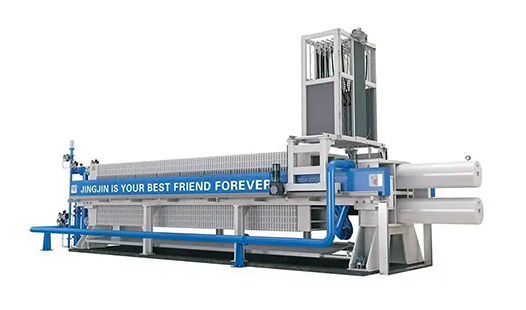
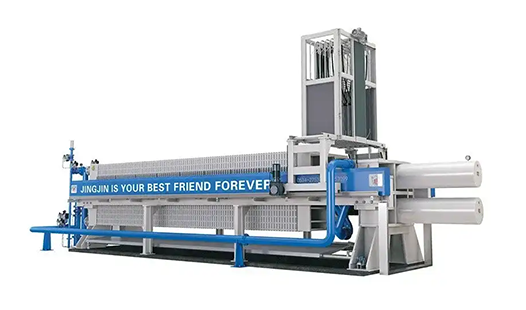
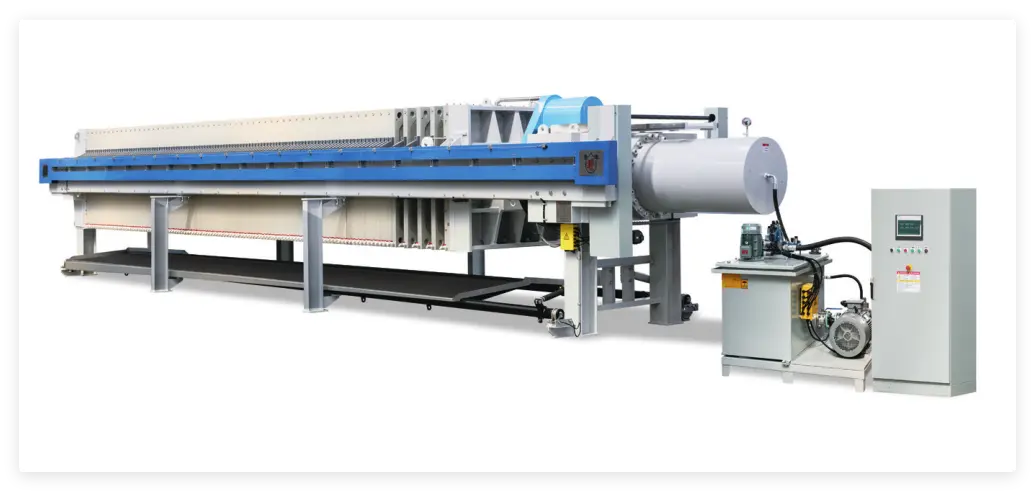
Know your operational challenges and technical necessities to use a filter press. The filter press is great at separating solids and liquids. Stacks of filter plates and cloths create pressure filtration chambers. To tailor anything appropriately, choose the suitable plate configurations, filter media, automation levels, and capacity parameters for your organization. Working with mining waste, wastewater sludge, or chemical residues requires customization for maximum dewatering outcomes, compliance, and long-term efficiency.
Understanding the Challenges in Filter Press Customization
Today's manufacturers require increasingly complex filtration methods to remove particulates from liquids. Each region has operational issues that affect tool selection and setup.
Industry-Specific Sludge Characteristics
Dewatering systems handle a variety of corporate trash streams. Mining activities generate vast volumes of mineral-rich tailings. Filter plates must withstand sharp bits and high pressure. Organic sludges with varying pH, oils, and living organisms are mainly treated in municipal wastewater facilities. Special filter cloth materials that don't degrade are needed.
Chemical manufacturers utilize slurries with powerful chemicals, acids, or bases that erode equipment. These circumstances need non-rusting polyethylene or stainless steel filter plates. Food and medicine companies require clean equipment. Surfaces must be smooth, equipment must be simple to clean, and materials must be food- and drug-safe.
Regulatory Compliance Complexities
Every industry's filter press design criteria are influenced by environmental legislation. Clean Water Act regulations govern treated effluent discharge, while RCRA guidelines govern solid waste disposal. Pharmaceutical businesses must follow the FDA's Current Good Manufacturing Practices, which include authorized cleaning techniques and material tracking.
Mining enterprises must obey MSHA safety requirements and state environmental licenses that limit tailings water and containment. These standards need automated tracking, record-keeping, and fail-safe capabilities that normal tools may not deliver.
Core Dimensions to Consider When Customizing Filter Presses
Customization works best with appropriate tools. Only meticulous technical factor analysis can do this.
Plate Design and Configuration Options
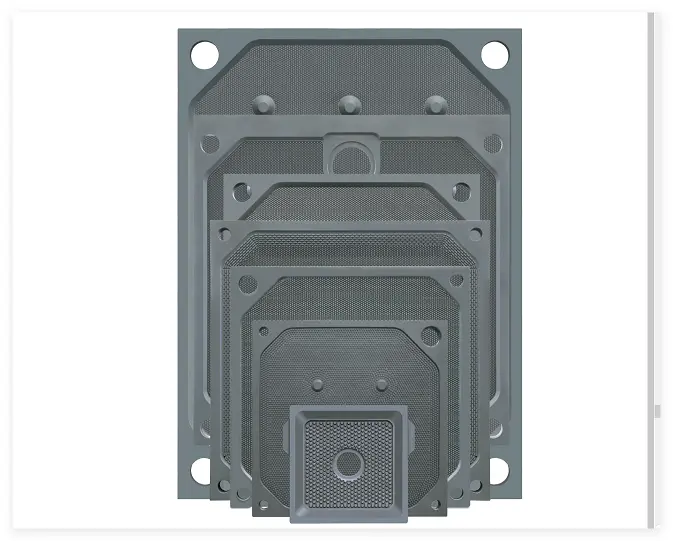
Customizing a filter press starts with plate selection. Deep portions on recessed plates make it easy to make cakes of various sizes from filterable materials. Membrane plates with inflatable diaphragms reduce moisture content by 3–5% during final drying.
Gasketed plate systems maintain seals at high pressure. This is crucial for tiny particle or harsh chemical applications. Work-appropriate plate materials are needed. Polypropylene plates withstand most chemicals and biological degradation, cast iron plates endure longer in hard conditions, and stainless steel plates resist rust in strong chemical processes.
Filter Cloth Selection and Performance
The filter cloth affects filtering quality, speed, and cake release. Monofilament polypropylene textiles are ideal for cake removal and preventing tiny particles from blinding. For high-clarity filtration, multifilament polyester cloths retain particles better.
Cloth weight and weave must fit particle size distribution and operating forces. Heavy-duty materials can withstand more pressure and endure longer. Specialized surface treatments help loosen cakes and reduce cleaning. Modern textiles include antimicrobial treatments for food preparation and conductive threads for chemical static control.
Automation and Control System Integration
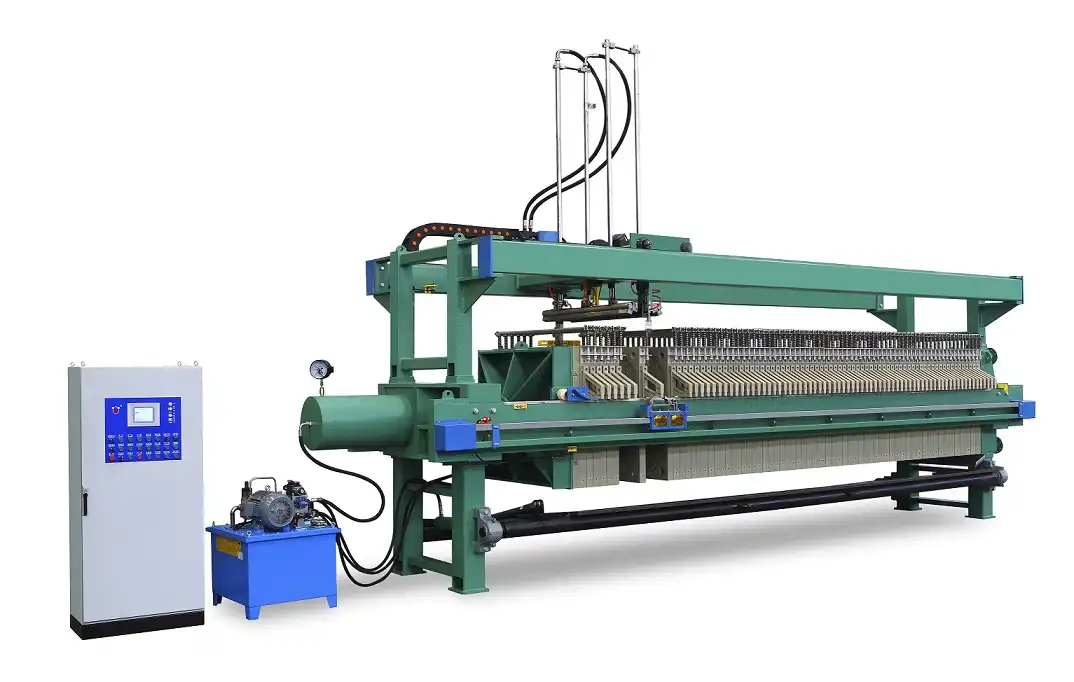
Modern filter systems contain automation that manages cycle duration, performance variables, and preventive maintenance, making them better. Pressure sensors, flow meters, and turbidity monitors may provide PLCs with real-time feedback to change press timings, wash sequences, and cake discharge procedures during filter cycles.
Human-machine interfaces enable workers to adjust system settings and record activities to follow rules and enhance the process. Maintenance staff may monitor equipment performance, identify issues before they worsen, and schedule preventive maintenance to save downtime.
Comparing Filter Press Customization Options Across Industries
Understanding how other companies employ customized filtration solutions might help you choose and install equipment.
Wastewater Treatment Applications
Municipal and commercial wastewater treatment facilities desire reliable, low-cost sludge dewatering that meets rigorous release criteria. Since membrane filter presses with automated cloth washing systems function with all sludge kinds, they are usually employed for these duties. Combining polymer conditioning devices with press operations improves flocculation and dewatering.
Stainless steel resists rust from wastewater treatment plant chlorinated wash water and aggressive cleaning chemicals. Enclosed designs prevent odors and worker exposure to hazardous chemicals. An automated cake discharge system reduces effort and ensures consistent trash preparation.
Chemical and Pharmaceutical Manufacturing
Chemical processing companies require instruments that can handle diverse products without contaminants from other manufacturing campaigns. Quick-change cloth systems may be adaptable to diverse items, and specialized seal materials don't bloat or break down in organic solvents and severe chemicals.
Pharmaceuticals need material certifications, surface finish requirements, and cleaning validation methods. Clean-in-Place features and established cleaning techniques ensure product safety and compliance with regulations in these systems. Workers and the environment are protected from active medical compounds via containment.
Alternative Technology Considerations
Some filter presses are superior to centrifuges, belt filters, and rotary vacuum systems for particular purposes. While centrifuges function best when operating constantly, they struggle with tough materials and need a lot of energy. Belt screens process continuously; however, the cake isn't as dry and requires large wash water systems.
Rotary vacuum filters can operate constantly for high-volume operations, although membrane filter presses may achieve low moisture content. You can accurately manage cake washing and dehydration using batch filter presses. For high-quality filtrate or maximal solid recovery, they are ideal.
Practical Steps to Customize Your Filter Press System
A planned customization technique ensures that tool specifications fit operations and performance objectives.
Operational Requirements Assessment
Making appropriate customization decisions requires a careful look at current practices. This review should describe feed materials' chemical makeup, temperature ranges, and annual fluctuations. High demand, scheduled maintenance breaks, and future expansion must be considered while determining output.
Facility constraints, including floor space, ceiling height, power supply capacity, and utility linkages, affect equipment setup. Integration with present process equipment, control systems, and material handling infrastructure must be thoroughly examined to ensure workflow efficiency.
Supplier Selection and Partnership Development
Working with experienced manufacturers that understand your business's demands will provide proven solutions and continuous support. Jingjin Equipment Inc. is a leading filter system customization company with 35 years of expertise and 136 patents. Their worldwide service network provides local setup, maintenance, and problem-solving in 123 countries.
When choosing a supplier, consider their production expertise, quality certifications, customized knowledge, and service framework. Patent-heavy companies are devoted to innovation and technology. Large-scale manufacturing ensures quality and on-time delivery of complex customization projects.
Installation and Commissioning Strategies
You must consider foundation considerations, utility connections, and how the new system fits into the old ones for a good installation. Site studies, utility capacity confirmation, and facility maintenance plans should be part of pre-installation planning to ensure smooth operations.
To ensure system functionality, all elements must be tested during commissioning. Safety interlocks, automation, and emergency shutdown are included. Performance testing with actual process materials validates design assumptions and gets us started on improving things. Full operator training ensures the equipment runs safely and well and helps the organization understand routine repairs.
Maximizing ROI Through Customized Filter Press Solutions
Properly built filtration equipment increases efficiency, lowers operating costs, and simplifies regulatory compliance.
Operational Efficiency Improvements
Customized systems may alter cycle timings, wash regimens, and automation settings to suit each application, resulting in 15–25% more labor. The membrane press technique decreases cake moisture by 3–5%, reducing waste and shipping costs. Technology makes processes more uniform and dependable while reducing labor.
Right-sizing pumps, improving pressure profiles, and adding variable frequency drives that adjust power consumption to process demands boost energy efficiency. Heat recovery systems may employ wash water or compressed air heat to make buildings more energy efficient and cheaper.
Predictive Maintenance and Performance Monitoring
Advanced tracking systems measure cycle durations, pressure profiles, filtrate quality, and energy use. This identifies repairs before unforeseen downtime. Vibration, temperature, and oil analysis programs optimize equipment performance and lifespan.
Data analytics tools may improve things by analyzing historical performance data and correlating operational characteristics to efficiency metrics. Knowing this, efforts may be taken to improve things, increasing ROI by increasing efficiency and cutting expenses.
Case Study Evidence
A large mining firm employed bespoke membrane filter presses to reduce wastewater by 40%. This reduced dumping costs by $2.3 million annually. The autonomous technology reduced operator workload by 60% and made remote work safer. Several firms have achieved similar benefits, proving that well-adapted filtering systems always work.
Conclusion
Customizing filter press systems for unique industries requires careful consideration of operating demands, regulatory constraints, and performance objectives. You must choose the proper plate designs, filter medium, automation levels, and process volume to make the system operate. For tried-and-true solutions and continuing technical support, deal with manufacturers that have been around a long time and understand your industry's issues. You gain efficiency, cheaper operational costs, and greater regulatory compliance when you acquire tailored filtration equipment, giving you an advantage in difficult industrial situations.
FAQ
1. What factors should I consider when adapting a filter press for a new application?
When making changes to filter tools for new uses, you need to look at the feed material's particle size distribution, chemical makeup, and temperature ranges. Think about the rules that apply to your business, the room and utilities that are available at the building, how it needs to connect to other equipment, and the performance goals you want to reach, like throughput rates and cake dryness levels.
2. How does automation improve filter press performance and maintenance?
Automation systems improve cycle timing based on real-time feedback, keep working settings consistent, lower the need for labor, and allow predictive repair through continuous tracking. Most of the time, these systems increase output by 15 to 25 percent while lowering unexpected downtime and making equipment last longer by making sure it works at its best.
3. Can existing filter press systems be upgraded as processes evolve?
Most current systems can be upgraded to include automation retrofits, membrane plate conversions, more advanced tracking systems, and more space. It depends on how good the current equipment is, how much room is available, and how much utility capacity is needed. Experienced makers can look at the possibilities for upgrades and suggest ways to make things better that don't cost too much.
Partner with Jingjin for Customized Filter Press Solutions
To maximize solid-liquid separation operations, work with an expert filter press maker that understands your business challenges. Over 35 years of technological knowledge and 136 patents allow Jingjin Equipment Inc. to offer unique filtering solutions that boost production and minimize expenses. Our comprehensive approach includes process analysis, equipment customization, installation assistance, and global servicing in 123 countries.
Contact our technical professionals at [email protected] to discuss how our bespoke filter press systems can increase your facility's performance, ensure compliance, and provide a verifiable return on investment. Because we've worked in mining, wastewater treatment, chemical processing, and pharmaceuticals, we can provide dependable, high-efficiency separation technology.
References
1. Smith, J.R., and Anderson, M.K. "Advanced Filter Press Design for Industrial Applications: A Comprehensive Analysis." Journal of Separation Technology, vol. 45, no. 3, 2023, pp. 234-251.
2. Chen, L., Rodriguez, P., and Williams, D.B. "Optimization Strategies for Solid-Liquid Separation in Chemical Processing." Industrial Filtration Quarterly, vol. 18, no. 2, 2023, pp. 89-106.
3. Thompson, K.S., et al. "Membrane Filter Press Technology: Performance Evaluation Across Multiple Industries." Proceedings of the International Conference on Industrial Separation Technologies, 2023, pp. 412-428.
4. Davis, R.M., and Johnson, A.L. "Regulatory Compliance in Industrial Filtration: Environmental and Safety Considerations." Environmental Engineering Review, vol. 29, no. 4, 2023, pp. 156-173.
5. Martinez, C.E., and Brown, S.T. "Cost-Benefit Analysis of Customized Filtration Systems in Mining Operations." Mining Technology Journal, vol. 67, no. 1, 2023, pp. 78-92.
6. Wilson, P.G., and Lee, H.K. "Automation and Control Systems in Modern Filter Press Applications." " Process Automation Today," vol. 31, no. 6, 2023, pp. 203-219.
jingjin
Founded in 1988, Jingjin specializes in filter presses and liquid-solid separation solutions, serving over 130 countries worldwide, and is a standard-setter in China's filter press industry.
Get the Filter Press guide
Enter Your Email for Technical assistance for the Filter Press.
Recommended Blog
Filter Press Solutions for India Pharmaceutical Plants from China
Chemical Resistant Filter Cloth for Mining: What You Need to Know
Screw Press Sludge Dewatering Machine for Municipal Wastewater
Where European Distributors Source Press Filter from China?