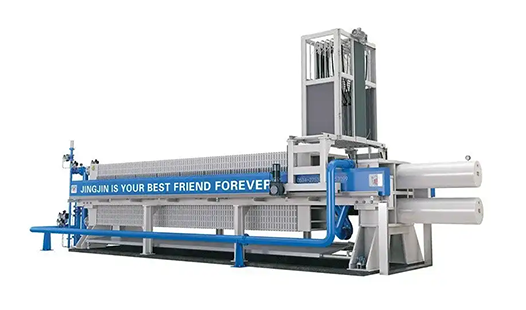
Exploring Multi-Stage Screw Press Designs for Enhanced Sludge Treatment Efficiency
Exploring Multi-Stage Screw Press Designs for Enhanced Sludge Treatment Efficiency
Understanding Multi-Stage Screw Press Technology
- Understanding Multi-Stage Screw Press Technology
- Advantages of Multi-Stage Screw Press in Sludge Treatment
- Performance Optimization Strategies for Multi-Stage Screw Presses
- Choosing the Right Multi-Stage Screw Press for Your Operation
- Conclusion
- FAQ
- Partner with Jingjin for Reliable Multi Disk Screw Press Solutions
- References
When municipal wastewater managers and industrial process engineers face persistent challenges with high sludge moisture content and escalating disposal costs, the multi disk screw press emerges as a transformative solution. This advanced dewatering technology integrates thickening and dewatering into a single compact system, utilizing alternating moving and fixed rings around a central screw shaft to achieve superior solid-liquid separation. Unlike belt presses that require extensive wash water or centrifuges that consume excessive energy, this innovative design delivers exceptional cake dryness while maintaining continuous, clog-free operation—addressing the core pain points that have long plagued wastewater treatment facilities.
Understanding Multi-Stage Screw Press Technology
Core Components and Operational Principles
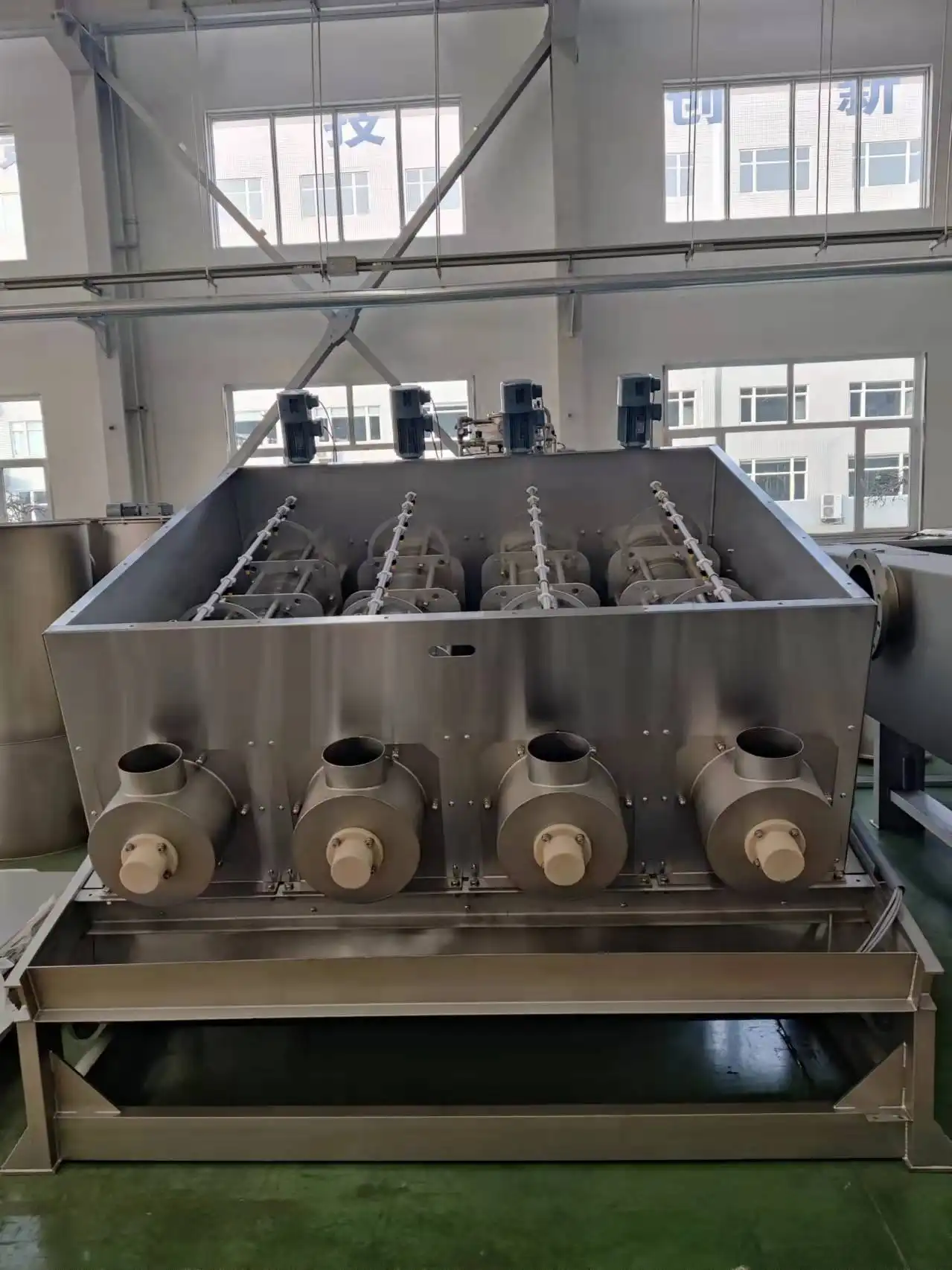
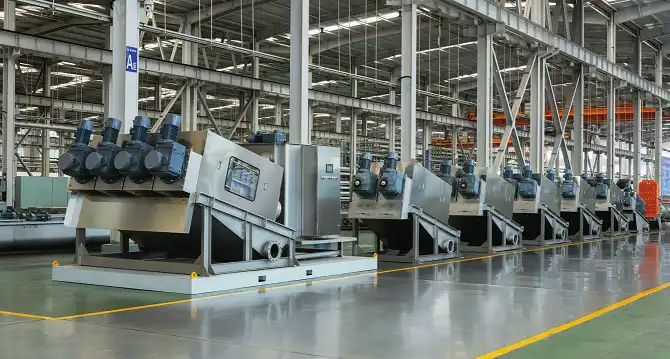
The multi-disc screw press operates with an ingenious system of moving and stationary rings piled one above the other around a slowly revolving screw shaft. As the sludge advances into the thickening zone, the screw moves the material through increasingly tiny spaces between the rings to increase the compression progressively. The rotation of the screw shaft moves the rings about in a circular motion, relative to the stationary rings, which has the effect of a self-cleaning mechanism that prevents filter blinding and is of particular importance when processing greasy or fibrous sludge.
This design philosophy leads to a dewatering process stepped through several pressure zones. The first part acts as a thickener, accepting influent containing as little as 0.2% solids. The remaining zones progressively increase the mechanical pressure to force water through the ring gaps. The filtrate passes through these openings to a collecting chamber, and the dewatered cake is discharged at the end. This ongoing procedure removes the batch processing of typical filter presses and allows non-stop 24-hour operation.
How Multi-Stage Design Differs from Conventional Methods
Traditional belt filter presses utilize gravity drainage and roller compression and require high-pressure spray systems to avoid cloth blinding. Centrifuges use high-speed spinning to remove water; they are energy hungry and noisy. The screw press architecture is fundamentally different, with low rotational speed (about 2-4 RPM), progressive mechanical compression, and power consumption about 70% lower than centrifugal dewatering.
The self-cleaning ring system is an innovative solution to filter blindness. In food processing facilities that handle slaughterhouse effluent or dairy sludge with high fat content, belt press cloths are saturated with grease rapidly, necessitating frequent washing or replacement. With every revolution, the friction between moving and fixed rings physically dislodges greasy residue, providing consistent filtration performance without high-pressure wash water. This feature makes screw dewatering technology particularly useful in applications where conventional techniques are not effective.
Advantages of Multi-Stage Screw Press in Sludge Treatment
Superior Moisture Reduction and Processing Capacity
Operational data from municipal wastewater treatment plants demonstrates that Multi disk screw press consistently achieves cake solids content of 18-25% for biological sludge, compared to 15-20% for belt presses under similar conditions. This difference translates directly into reduced disposal volumes and costs. A facility processing 50 tons of sludge daily can reduce disposal loads by approximately 30% through improved dewatering, generating significant annual savings when hauling costs reach $80-120 per ton.
The staged compression approach enables higher throughput within a compact footprint. Modern screw press designs handle 20-150 gallons per minute of sludge feed, with some industrial models exceeding 300 GPM. Processing capacity scales with screw diameter and length, allowing manufacturers to configure systems matching specific site requirements. This flexibility supports both small municipal plants and large industrial operations handling diverse waste streams.
Energy Efficiency and Operational Cost Reduction
A major part of the operational cost of dewatering equipment is power consumption. Centrifuges usually need 2-4 kW/m3 of sludge treated, and screw presses 0.5-1.5 kW/m3. The savings in utilities over a year of continuous running are enormous. For example, a 100 GPM screw press may require 15 kW against 45 kW for a comparable centrifuge. This can translate into a savings of around $26,000 per year at commercial power rates.
Another hidden cost is water use. Belt filter press cloth washing requires 800-1500 gallons per hour. This increases both water bills and plant hydraulic burden. The self-cleaning ring design decreases wash water to less than 1% of belt press usage, frequently as low as 10-20 gal/hr for intermittent cleaning. This benefit is attractive to facilities with water scarcity or expensive wastewater fees.
Versatility Across Industrial Applications
The system may be tailored to many different areas, not just municipal wastewater. In the chemical industry, where sludges can contain aggressive compounds, screw presses built of SS316L stainless steel are capable of surviving corrosive conditions that would destroy conventional equipment. The design incorporates volatile organic chemicals and smells and complies with the safety criteria for petrochemical applications.
The equipment can handle high-density slurries, including abrasive particles. This is an advantage for mining companies needing to dewater tailings and concentrate. Mobile dewatering of bentonite drilling mud and tunnel boring machine slurry is needed on construction sites. Compact screw press designs are put on trailers to treat the slurry on site without a permanent installation. Food and beverage processors using brewery spent grain, winery pomace or rendering plant waste are using the system’s FOG-handling capability to reclaim valuable solids for animal feed or composting.
Performance Optimization Strategies for Multi-Stage Screw Presses
Identifying Common Operational Bottlenecks
Process engineers frequently encounter challenges that limit dewatering performance Multi disk screw press. Inconsistent sludge feed concentration causes cake moisture variability—when inlet solids fluctuate between 0.5% and 2%, the screw press struggles to maintain stable compression. Installing a sludge thickening tank or adjusting upstream processes to stabilize feed characteristics resolves this issue.
Polymer dosing optimization significantly impacts performance. Under-dosing results in poor floc formation and high filtrate turbidity, while over-dosing creates excessively sticky sludge that adheres to rings. Bench-scale jar tests determine optimal polymer type and dosage, typically ranging from 3-8 kg per ton of dry solids for cationic flocculants. Automated polymer feed systems with real-time flow-proportional dosing maintain consistent conditioning despite feed variations.
Mechanical Adjustment Techniques
The main control parameter is the screw rotating speed. Increased speed can increase throughput, but can reduce cake dryness if the material is not given sufficient residence time. Slower pace leads to better dewatering but can create cake build-up and discharge difficulties. Most applications are optimized at 2-4 RPM; however, settings are dependent on the sludge characteristics. More sophisticated systems contain variable frequency drives, allowing operators to vary speed in real-time cake moisture monitoring.
Ring gap adjustment may be adapted for various types of sludge. Biological sludge with good settling properties may withstand shorter gaps (typically 0.5-1.0mm) and hence higher pressure. Wider intervals are needed for difficult sludges having fine particles or low dewaterability to prevent excessive pressure build-up and to sustain cake discharge. Some manufacturers offer some adjustable back-pressure devices at the discharge end for more control of the compression force.
Pre-Treatment Integration for Enhanced Results
Thermal or chemical pre-treatment followed by screw press dewatering improves performance. Thermal hydrolysis at 150–170 °C breaks down the cell walls of the microbes, releasing bound water and enhancing dewaterability. Plants using this pre-treatment report cake solids increase from 22% to 28-32%. But capital expenditures and energy requirements must justify the investment through lower disposal costs or energy recovery.
Chemical conditioning is not just about adding polymers. Lime stabilization raises the pH to 12 or above, coagulating the solids and achieving Class A biosolids pathogen control. Effect of Addition of Ferric Chloride on Phosphorous Precipitation and Sludge Structure. These pre-treatments are to be carefully combined with screw press chemistry, where alkaline conditions may require corrosion-resistant materials and ferric salts may increase abrasive wear.
Choosing the Right Multi-Stage Screw Press for Your Operation
Evaluating Sludge Characteristics and Treatment Goals
Successful equipment selection begins with comprehensive sludge characterization. Total suspended solids concentration, settleability, compressibility, and particle size distribution all influence dewatering behavior. Laboratory testing using capillary suction time (CST) and specific resistance to filtration (SRF) quantifies dewaterability, guiding equipment sizing and polymer selection. Sludge with CST above 100 seconds typically requires enhanced conditioning or alternative dewatering methods.
Treatment objectives vary by application. Municipal plants prioritize regulatory compliance for land application or incineration moisture limits, typically targeting 18-20% solids. Industrial facilities focused on minimizing disposal costs push toward maximum dryness, accepting slightly higher polymer consumption to achieve 25-30% solids. Mining operations may emphasize filtrate clarity for water recirculation rather than cake dryness. Clearly defining performance criteria ensures equipment specifications align with operational priorities.
Comparing Technology Options and ROI Analysis
When evaluating competing technologies, the total cost of ownership over the equipment's 15–20 year lifespan provides the most meaningful comparison. Capital costs for screw presses typically range from $150,000 to $500,000, depending on capacity, compared to $200,000–$800,000 for centrifuges and $100,000–$300,000 for belt presses. Operating expenses tell a different story—Multi disk screw press systems, like other screw press technologies, benefit from lower energy and water consumption combined with minimal maintenance, often yielding payback periods of 3–5 years relative to centrifuges.
Capacity requirements drive sizing decisions. A general guideline suggests 1-2 GPM processing capacity per pound of dry solids per hour, though actual throughput depends on sludge characteristics. Oversizing provides operational flexibility and redundancy, while undersizing creates bottlenecks during peak flow periods. Many facilities install multiple smaller units rather than a single large press, enabling staged commissioning and maintaining partial capacity during maintenance.
Supplier Selection Criteria and Customization
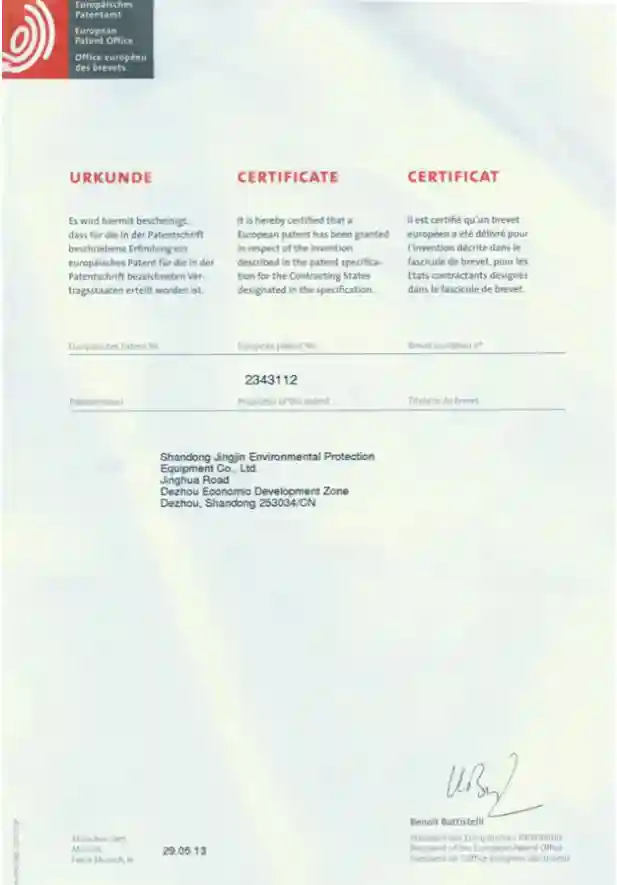
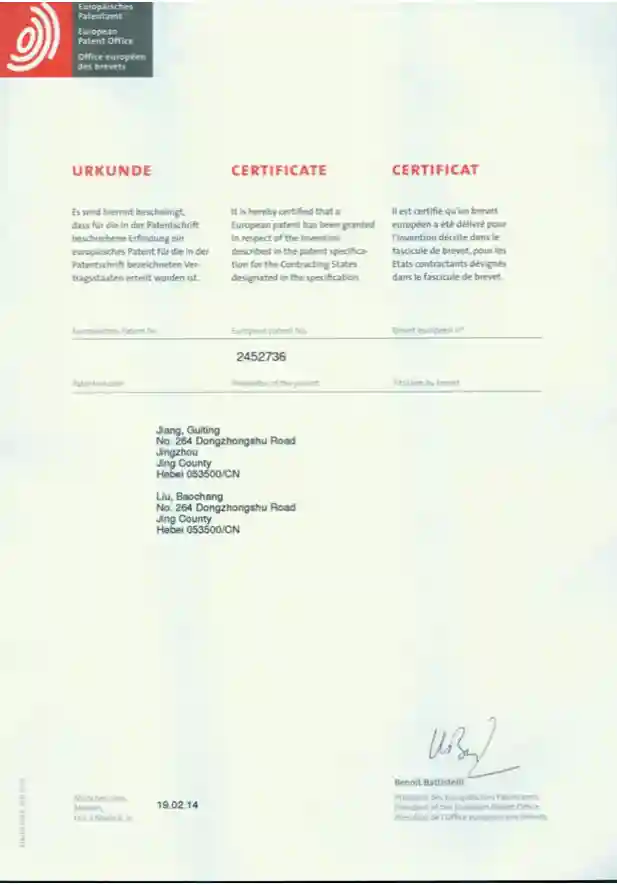
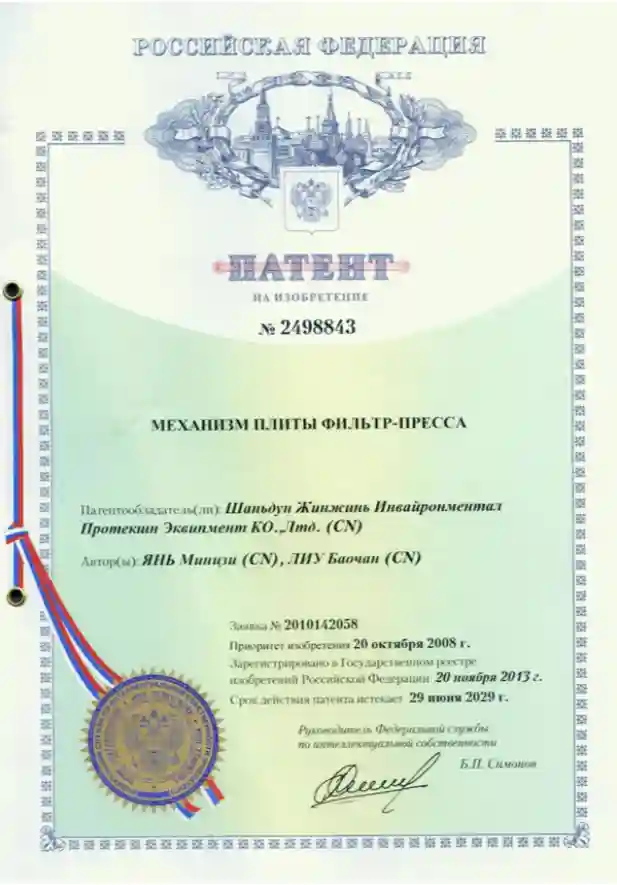
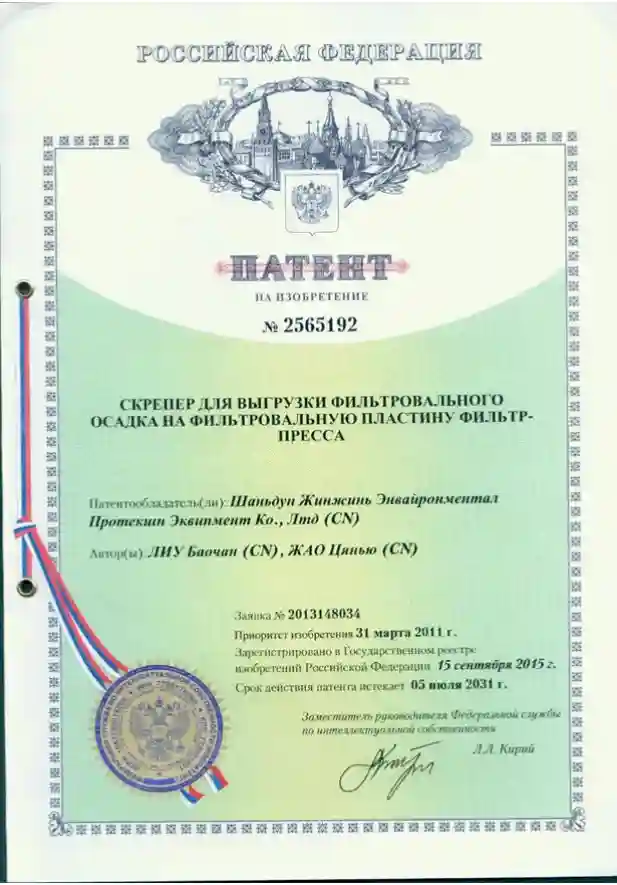
Established manufacturers with extensive application experience offer critical advantages beyond equipment supply. Jingjin Equipment Inc., with over three decades of filtration technology development and deployment across 123 countries, exemplifies the supplier characteristics that ensure long-term success. Their 136+ patents reflect continuous innovation addressing real-world operational challenges, while comprehensive service networks provide rapid technical support when issues arise.
Customization capability separates commodity suppliers from solution providers. Chemical-resistant materials, explosion-proof electrical systems, heating jackets for cold climates, and automated controls integrating with plant SCADA systems represent common modifications. Suppliers offering pilot testing services enable clients to validate performance with actual sludge before finalizing specifications, reducing commissioning risk. Comprehensive documentation including O&M manuals, spare parts lists, and maintenance training supports in-house capability development.
Conclusion
Multi-stage screw press technology represents a fundamental advancement in sludge dewatering, combining superior performance with operational simplicity and cost-effectiveness. The self-cleaning ring mechanism, progressive compression staging, and minimal water and energy consumption address the critical pain points facing wastewater treatment professionals today. Whether managing municipal biosolids, industrial process sludge, or mining tailings, selecting the appropriate screw press configuration and partnering with an experienced manufacturer ensures long-term operational success. As environmental regulations tighten and disposal costs escalate, facilities implementing this technology position themselves for sustainable, economical sludge management well into the future.
FAQ
1. What distinguishes multi-stage from single-stage screw presses?
Multi-stage designs incorporate distinct thickening and dewatering zones with progressively smaller ring gaps, enabling higher throughput and superior cake dryness compared to single-stage units. The staged compression allows direct processing of low-concentration sludge (0.2-2% solids) without separate thickening equipment, reducing capital costs and plant footprint.
2. Which sludge types achieve optimal results with this technology?
Municipal biological sludge, food processing waste with high FOG content, chemical precipitates, and pulp and paper mill biosludge respond well to screw press dewatering. The self-cleaning ring mechanism handles difficult materials, including oily sludge and fibrous waste that blind belt press cloths. Extremely fine particles below 10 microns or highly compressible sludges may require enhanced polymer conditioning.
3. What factors influence equipment acquisition costs?
Capacity measured in flow rate and solids loading drives base pricing, with larger units costing proportionally more. Material construction—carbon steel versus SS304 or SS316L—significantly impacts price. Automation levels, integration complexity with existing plant controls, and custom features such as explosion-proof certification or heating systems add incremental costs. Installation, commissioning, and training expenses typically add 15-25% to equipment cost.
Partner with Jingjin for Reliable Multi Disk Screw Press Solutions
Addressing sludge dewatering challenges requires more than purchasing equipment—it demands a trusted multi disk screw press manufacturer capable of delivering proven technology and sustained support. Jingjin Equipment Inc. brings over 35 years of filtration expertise and a portfolio of 136+ patents to every project, serving clients across mining, municipal wastewater, chemical processing, and construction sectors in 123 countries worldwide.
Our compact, space-saving screw press designs integrate seamlessly into existing facilities while delivering exceptional performance. The automated operation and self-cleaning ring mechanism minimize maintenance demands and eliminate the constant attention required by belt presses. When you choose Jingjin, you gain access to comprehensive engineering support, customized solutions addressing your specific sludge characteristics, and a global service network ensuring rapid response whenever you need assistance. Contact our technical team at [email protected] to discuss your dewatering requirements and discover how our multi disk screw press technology can reduce your disposal costs while meeting increasingly stringent environmental regulations.
References
1. Metcalf & Eddy, Inc., "Wastewater Engineering: Treatment and Resource Recovery," 5th Edition, McGraw-Hill Education, 2014.
2. Water Environment Federation, "Design of Municipal Wastewater Treatment Plants: Manual of Practice No. 8," 6th Edition, WEF Press, 2018.
3. U.S. Environmental Protection Agency, "Biosolids Technology Fact Sheet: Multi-Disk Screw Press," Office of Water, EPA 832-F-03-031, 2003.
4. Vesilind, P.A., "Treatment and Disposal of Wastewater Sludges," Ann Arbor Science Publishers, Revised Edition, 1979.
5. Chen, G., Yue, P.L., and Mujumdar, A.S., "Sludge Dewatering and Drying," Drying Technology: An International Journal, Volume 20, Issue 4-5, 2002.
6. Japanese Sewage Works Association, "Dewatering Technology for Sewage Sludge: Screw Press Type Dehydrators," Technical Standards and Guidelines, JSWA Publication 2016.
jingjin
Founded in 1988, Jingjin specializes in filter presses and liquid-solid separation solutions, serving over 130 countries worldwide, and is a standard-setter in China's filter press industry.
Get the Filter Press guide
Enter Your Email for Technical assistance for the Filter Press.
Recommended Blog
How to Choose the Best Feed Pump for Filter Press in Water Treatment
Screw Press Sludge Dewatering Machine for Municipal Wastewater
China Screw Dewatering Machines for Asia Infrastructure Projects
Integration of Press Pump and Filter Press Systems for Enhanced Performance
Filter Press Cloth Maintenance Tips: Prolonging Lifespan and Efficiency
Automated Filter Press Systems: Revolutionizing Industrial Filtration Processes